
EU nails down five defense priority areas to channel common spending
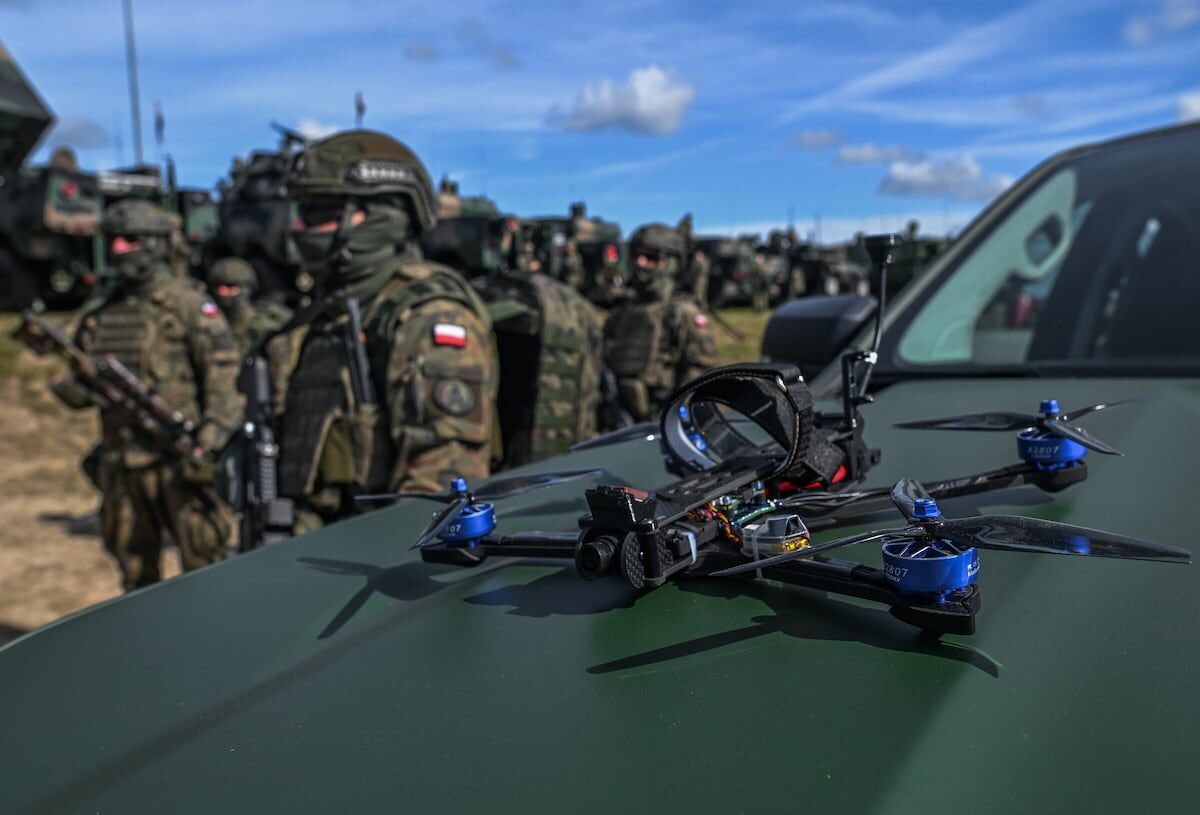
PARIS — European Union member states approved five projects for joint defense-industrial investment in priority areas including drones and counter-drone systems as well as air and missile defense, part of efforts to encourage more cooperation on defense spending and avoid overlap in the 27-nation bloc.
The five projects approved on Monday are now eligible for EU funding via the €1.5 billion (US$1.7 billion) European Defence Industry Program, the Council of the EU, which acts as the bloc’s co-legislator, said in a statement. The other selected projects are in the areas of maritime and seabed defense, space, and protection of Europe’s eastern flank.
The European Commission has allocated €325 million for European defense projects of common interest, or EDPCIs in EU lingo, as part of EDIP. While the commission has been pushing to reduce fragmentation in Europe’s defense industry, cooperation between member states has been challenging due to competing industrial interests, illustrated by the recent breakdown of a French-German project to develop a sixth-generation fighter jet.
“These pan-European projects will make a difference for our EU member states’ armed forces, for Ukraine and for our security as a whole,” European Commissioner for Defence Andrius Kubilius said in a post on the social-media network X, formerly Twitter.
He called the approval of the five projects of common interest a “major breakthrough” that will close critical capability gaps in the EU, with an “envisaged funding ambition” of around €190 billion by 2036.
The EDPCIs are large-scale projects that give member states a framework to cooperate on major defense initiatives that would be too large or complex for individual countries to tackle on their own, according to the commission. The projects are designed to extend beyond the current EDIP funding period, which runs through 2027.
The EU’s executive arm will now work with member states to implement the projects and monitor their progress, and also expects to provide financial support, it said in a separate statement on Monday. On average, 18 EU countries participate in each project, with Ukraine part of four of the five projects, the commission said.
The project on drone and counter-drone defense, with the acronym Decoder, unites most EU member states as well as Norway and Ukraine, according to a commission fact sheet. The indicative overall investment is in the range of €3.5 billion to €5 billion by 2033.
The integrated maritime and seabed defense project, or IMSD, has an indicated investment envelope of €43 billion to €72 billion by 2045, while indicative overall spending under consideration for the space project amounts to €24 billion by 2034.
Investment in the EU Federated Air and Missile Defence project, or EU-FIAMD, which includes an early warning element, could be anywhere between €55 billion and €80 billion by 2040, according to the commission fact sheet.
The Eastern Flank Watch project, which aims to strengthen security on the EU’s eastern border through “a comprehensive multi-domain effort,” with participation from 12 EU members as well as Norway and Ukraine, is indicated to result in between €60 billion and €100 billion of investments by 2036.
Rudy Ruitenberg is a Europe correspondent for Defense News. He started his career at Bloomberg News and has experience reporting on technology, commodity markets and politics.