
Dutch say ASW frigate talks ongoing amid reports Belgium may quit project
PARIS — The Netherlands said discussions with Belgium are ongoing about a delayed joint project to develop anti-submarine warfare frigates, amid reports the Belgian government is looking for a way out and is shopping for a European alternative that can replace its two aging existing frigates sooner.
Belgium must have replacements on time, according to the country’s Chief of Defence Gen. Frederik Vansina, Dutch news agency ANP reported on Wednesday. Vansina told ANP that Belgium does not want to dictate terms to the Netherlands, but cannot afford to be left without major naval vessels, with its frigates Leopold I and Louise-Marie at the end of their usable lives in 2030.
The frigate project led by Dutch shipbuilder Damen has been plagued by delays, many related to its design, which increased in size over time and had to be corrected due to structural stability issues. From an original expectation that the first vessel might enter service around 2025, the Dutch Ministry of Defense now expects the first new anti-submarine frigate to be delivered no earlier than 2033.
Belgium is looking whether, for example, Italian-built frigates could be delivered more quickly, and is in talks with the Netherlands about interim solutions, such as Damen delivering a small frigate as a temporary stop-gap measure, ANP reported, citing Vansina. The general said the fact that Belgium has approached other frigate builders “is not abnormal and certainly not unfriendly.”
“It’s paramount for Belgium to maintain that operational capability,” Vansina told ANP. “The only naval firepower we have are those frigates.”
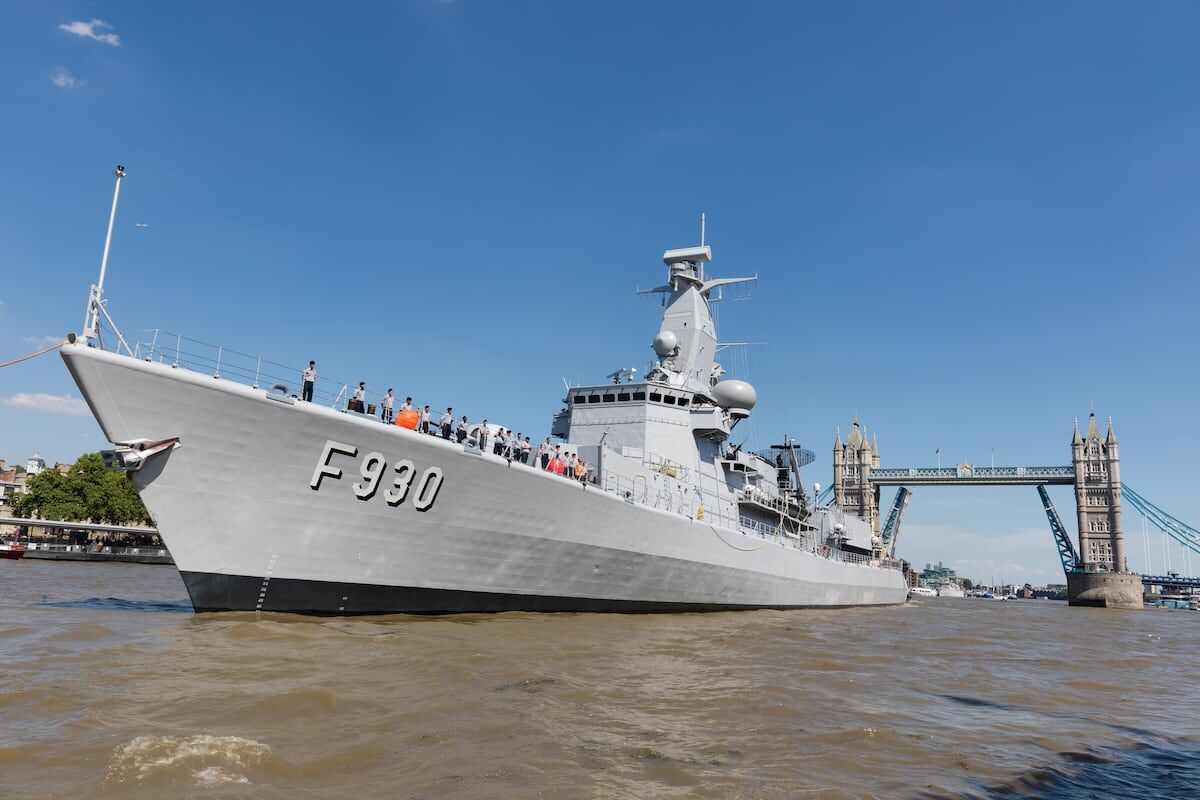
The Belgian Navy’s two frigates are former Dutch Karel Doorman-class frigates that were laid down and launched in the 1980s, with Belgium buying them second-hand from the Netherlands in 2005.
Dutch State Secretary for Defense Derk Boswijk discussed the frigate project and the importance of the countries’ bilateral maritime cooperation with his Belgian colleague earlier this week, he told parliament in a letter on Wednesday, responding to questions about reports of Belgium considering Italy’s FREMM EVO over the future frigates being developed by Damen.
Boswijk and Belgian Defence Minister Theo Francken met in Brussels on Sept 28, and both posted on social media they had a “good and constructive discussion,” with Boswijk saying the two talked about the progress of various dossiers.
“Given the commercially confidential nature of this process, we agreed not to comment on media reports regarding our cooperation,” Boswijk told parliament.
An internal analysis by the Belgian Navy identified Fincantieri’s FREMM EVO frigate as the best alternative, with the Italian builder able to deliver the first vessel in 2030 and the cost remaining within Belgium’s budget of €3.2 billion ($3.6 billion) for three vessels, the news website of public broadcaster VRT reported last week, citing the internal document.
Naval Group’s FDI frigate is also considered a good option, but the 2030 delivery deadline is uncertain as the yard is already booked with orders from France, Greece and Sweden, according to VRT NWS.
The Dutch MoD said in its 2026 materiel project plan that delivery of the first new ASW frigate has been pushed back to 2033 from 2030 as the original ship design had to be fixed.
The project-goal letter in 2018 had envisaged a first frigate to be operational around 2025, with the Ministry of Defense saying at the time it would request offers from Damen and Thales Nederland without a competitive tender. In a Dutch-Belgian memorandum of understanding later that same year, the countries agreed that Belgium would receive its vessels in 2030 at the latest.
Following discussions with Damen as the intended shipbuilder and Thales for the radar and fire control system, the MoD told parliament in 2020 that a detailed design phase of about two years would be necessary before the start of construction, with the first frigate expected to be delivered in 2027 and operational the next year.
In the 2023 procurement proposal letter, the MoD expected physical construction to start in 2025, while expected delivery had been pushed back by a year. The procurement proposal also touted the possibility of cooperating with Germany around the F126 frigates to be built by Damen, a project that has since been scrapped following years of delays and cost overruns.
Under the original plan the Netherlands was to order two frigates for its Navy and two more on behalf of the Belgian Navy. The Dutch said in 2024 they would double their order to four, while Belgium announced in 2025 the country would increase its order to three.
In the 2023 letter to parliament, the ministry said the budget for two Dutch frigates had increased to €1.88 billion, a number that was revised upwards again to €1.96 billion in early 2024.
The size of the proposed frigate has crept up over time, from a plan in mid-2020 for a ship displacing 5,500 tons to a definitive design of around 6,400 tons, and compared to about 3,300 tons for the existing M-frigate class that the new vessels are set to replace.
Rudy Ruitenberg is a Europe correspondent for Defense News. He started his career at Bloomberg News and has experience reporting on technology, commodity markets and politics.