
Coast Guard places $248 million order for first MQ-9B drones
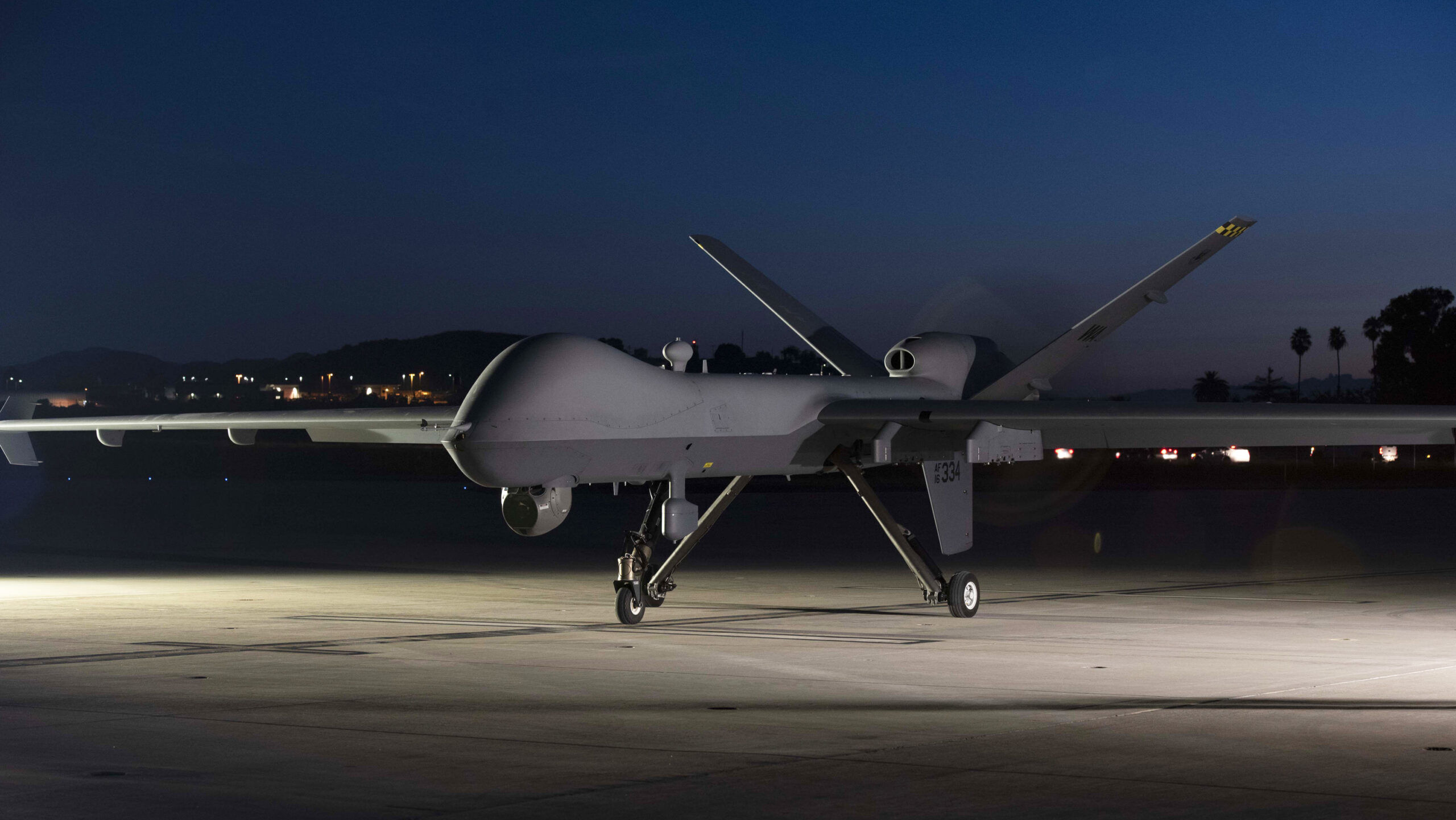
WASHINGTON — The Coast Guard is purchasing MQ-9B drones for the first time, ordering four of the high-flying unmanned aerial vehicles for just under $250 million.
The aircraft will support the service to oversee offshore waters, conduct search and rescue operations, and help counter drug trafficking operations, among other things, the Coast Guard said in a news release today. They are not expected to carry weapons, a service spokesperson told Breaking Defense.
“The MQ-9B long-range unmanned aircraft systems will expand our reach and strengthen our ability to protect the nation,” Anthony Antognoli, the assistant commandant and program executive officer for robotics and autonomous systems for the Coast Guard, said in a statement. “This investment will give Coast Guard crews a longer-range view of our maritime domain, helping them detect threats earlier, make better-informed decisions and act faster across our missions.”
The Coast Guard first revealed its plans to purchase the drones last year, thanks to funding the service received from President Donald Trump’s “One Big Beautiful Bill” that passed in July 2025, Military Times previously reported.
The Coast Guard said today that funding for the MQ-9B acquisition stemmed from the FY25 reconciliation package that included nearly $25 billion for the service, along with FY26 appropriations. The MQ-9B purchase totaled $247.8 million for the four aircraft, along with ground control stations and other supporting equipment, the Coast Guard said.
The Coast Guard has previously teamed up with the US Customs and Border Protection (CBP) and flown CBP’s MQ-9A drones for operations out of Texas, according to a Coast Guard factsheet. The Coast Guard noted in today’s release that the aircraft supported CBP to seize 60,700 pounds of illegal drugs and the apprehension of roughly 20 “smugglers” in FY26.
The MQ-9B SeaGuardian is designed to conduct maritime intelligence, surveillance, and reconnaissance operations for more than 30 hours at a time with a mission radius of roughly 1,200 nautical miles, according to General Atomics, which builds the aircraft.