
One year in, Army’s FUZE leader eyes ‘bigger’ acquisition challenges
WASHINGTON — After a first year focused on adapting prototype technologies for military use, the Army’s FUZE innovation hub is setting sights on more complex acquisition challenges in fiscal 2027.
“A lot of what we’ll see in FY27 is leveraging mechanisms within the Army FUZE portfolio to address bigger Army acquisition problems, and I think again this demonstrates that the Army recognizes we need to diversify the defense industrial base,” FUZE Director Matt Willis told Breaking Defense in an interview last month.
Established in September 2025 by then-Army Secretary Dan Driscoll, FUZE is the service’s flagship venture-capital innovation engine designed to accelerate deployment of new technologies using pre-existing acquisition mechanisms. The office falls under the Army’s Pathway for Innovation and Technology (PIT) portfolio, which is facilitated by the Assistant Secretary of the Army for Acquisition, Logistics and Technology office.
According to Willis, the organization’s overall goal is to find new tech and deliver it to the warfighter faster. But FUZE’s first year also showed the challenge of making sure promising technologies don’t stop at the prototype stage where they can fall into the ever-dreadful tech valley of death.
That prompted the organization to focus on getting Army acquisition officials involved earlier to create a clearer path toward procurement in FY27, he said.
“We need to incentivize innovation, and we need to invest in emerging or bleeding-edge capabilities to stay ahead of the rapidly evolving threat landscape … or how fast war is changing. We can see that in Ukraine and elsewhere,” Willis said.
Igniting the FUZE
Broadly, the PIT acts as a “plus one” structure in tandem with the Army’s six Portfolio Acquisition Executives (PAEs), bringing together multiple offices focused on fielding emerging capabilities. All organizations within the PIT are geared toward harnessing innovation and getting tech to the warfighter sooner, but FUZE specifically uses a venture-capital style model to do so.
FUZE is allocated $750 million in annual, “non-dilutive” research, development, test and evaluation (RDT&E) funds. The money is pulled together from four existing innovation efforts — xTech, Small Business Innovation Research/Small Business Technology Transfer (SBIR/STTR) Programs, the Technology Maturation Initiative and the Army Manufacturing Technology Program.
Before FUZE, the four funding streams were dispersed throughout the Army, making it difficult for companies to understand how to acquire funding for a promising capability, Willis said.
“The big piece and the power of the Army FUZE program is this sort of continuity, or seamlessness — or as seamless as we can make it in the government,” Willis said.
First, companies demonstrate their capabilities during Army xTech competitions and if they are placed among the top contenders they win a cash prize. Then, the SBIR program gives those vendors additional money to develop initial prototypes, while the TMI funding helps with “scaling that prototype,” Willis said. The final step is securing the ManTech investment, which vendors use to reduce manufacturing costs.
Once this process is complete, the Army’s network of venture and private capital partners “inject” funding into the companies so they can eventually scale their products and get on contract with the service through the PAEs, Willis explained.
“This has really been foundational in terms of bridging the gap between [the Army’s] mission needs and private sector venture capital,” he said. “Rather than expecting startups to just rely solely on government R&D funding, we’re actively signaling defense priorities to private markets.”
But FUZE is still refining the process to ensure vendors come out with a contract instead of a box full of prototypes, he said. To achieve this, the office wants to engage with PAEs from the outset to ensure there’s a clear pathway for tech to advance.
“I’d say we’re doubling down or tripling down on this sort of mandate that, for all of our FUZE investments — for all the project investments that we’re making — we’re building in this piece where we have buy-in from the warfighting unit,” Willis said.
Drones Dominate, EW Less So
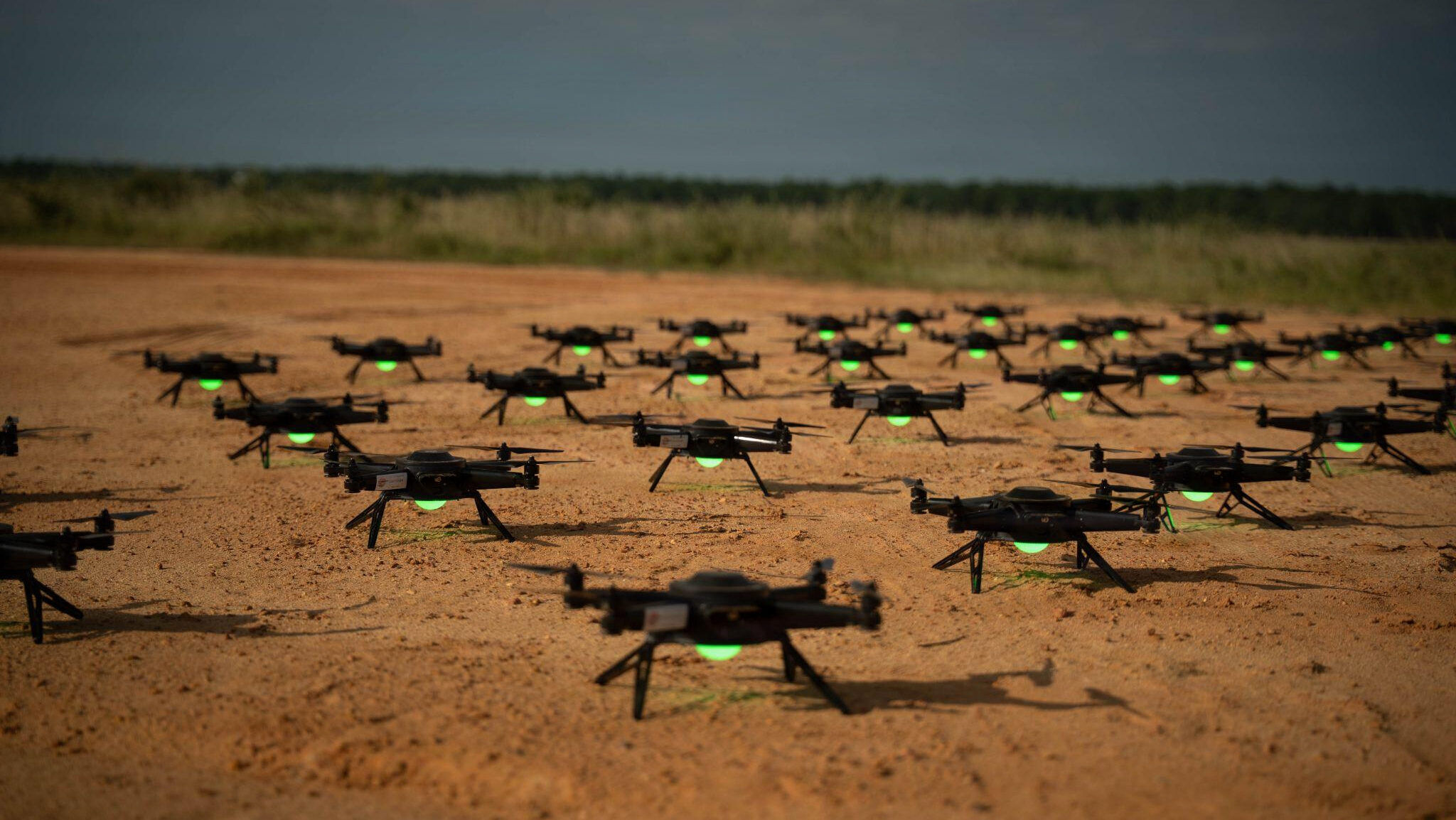
FUZE held about 16 xTech competitions in fiscal 2026 focused primarily on drones, counter-drone systems, electronic warfare and energy resiliency. Willis said the office “exceeded” its goal of getting capabilities into the field within 60 to 75 days of posting a solicitation — a process that can traditionally take several months or even years.
In some cases, the organization was able to go from a solicitation to contracts in less than five days. All four technology areas have made it into the field in some capacity, meaning the tech was either delivered to a unit for permanent use or as part of a “soldier experimentation event,” Willis said.
Vendors were more receptive to some capabilities than others, with drone and counter-drone tech being the most popular among industry, Willis said.
“The commercial sector is already mass producing these platforms at high volume, and what we’re looking for in the Army is not starting with basic research and matriculating all the way up through a prototype,” he said. “Then a big piece for us from an adaptation perspective is — how can we make them military grade?”
By contrast, electronic warfare drew less industry interest because “it has the least overlap with commercial applications,” Willis said. As for energy resiliency capabilities, FUZE has provided some solutions to the field, but it’s still “definitely the latest push,” he added.
FUZE now wants to tackle more challenging acquisition problems, including low-cost interceptors. While these systems are not considered widely commercially available or affordable, they can be built using off-the-shelf, inexpensive components, Willis explained.
To kickstart the effort, FUZE launched the xTech Disrupt Fires competition to search for a second low-cost interceptor for the Army’s Indirect Fire Protection Capability (IFPC) Increment 2 program specifically designed to hit low-flying and supersonic targets.
During the annual AUSA conference this year, FUZE will award up to four companies a $1 million cash prize each for the program, “which is intended to jumpstart capability development for the second interceptor,” Willis said.
The prize pool is far smaller than the funding required to build the IFPC Increment 2 interceptors currently being developed. Lockheed Martin and a Boeing-Anduril team were recently selected to move onto the second phase of the initial competition, but Willis clarified that while FUZE tech could feed into the larger Army IFPC Inc 2 program, the two are separate for now.
“We’re executing this [FUZE] competition to see if we can incentivize or identify novel technology approaches to meet this mission. So this is in parallel,” he said. “If successful at the end, there will be an opportunity to integrate within the broader program of record, but the vendors that were selected for IFPC Inc 2 second interceptor are moving along their way.”
Apart from the low-cost interceptor competition, Willis said there are other larger acquisition issues FUZE plans to tackle in FY27, but declined to share them as he said they are “not fully baked.”
“I’d say we’ve moved away from the prior acquisition methodology of spending years, if not decades, developing some bespoke, eloquent solution that really didn’t work in the field to recognizing that we need to move quickly and take risks to make sure that our soldiers have access to the best technology,” Willis said.