
‘Noticeable shift in warfare’: US Army under secretary on the lessons of modern combat
The U.S. Army is entering unprecedented territory.
Demand for exquisite munitions has skyrocketed as conflicts in Iran and Ukraine — and an ever-tense Indo-Pacific — continue to redefine stockpile demand.
So, too, has there developed an insatiable market for cheap systems and interceptors capable of balancing scales that, in regions like the Middle East, have been encumbered by cost-per-kill ratios as lopsided as 114-1 — in the case of a PAC-3 interceptor versus a Shahed-136 drone.
If that weren’t enough to consider, there’s the lightning-quick speed of AI integration and unmanned systems into formations, and the reality of having to rethink a simple concept — hiding — that was seldom given a second thought due to the total air superiority of the Global War on Terror.
Such frenzied developments, meanwhile, come against a backdrop of new Pentagon policy that aims to eliminate the antiquated red tape of the acquisition process and speed development to the battlefield.
A daunting cluster of problems to solve, no doubt. But if encountering such a catalog of to-dos is stress-inducing, one would not know it when speaking to U.S. Army Under Secretary Mike Obadal, who finds himself at the center of many of these discussions.
From his office and out on the trail, Obadal oversees the service’s business operations, acquisition strategy, and manpower and personnel systems, among myriad other duties.
Obadal assumed the position after a stint in the private sector, which followed a military career that included time as a Special Operations officer, the status of Master Army Aviator and qualifications in nine different aircraft.
Obadal spoke to Military Times about how he and the Army are approaching these seismic shifts in warfighting philosophy, and how this year’s AUSA exposition reflects the blistering pace of innovation that catalyzes them.
There are many examples of individuals without military experience working in consequential positions within the Pentagon. You are not one. How has your military experience shaped how you approach this role?
What I try very hard to do is not let my experience drive the way I do things. I want it to inform the way I do things, whether that’s my experience working with the interagency and seeing how other executive branch agencies operate, my experience in the conventional military or in other parts of the military, doing joint work, working with partners and allies or going out into corporate America.
I don’t want any one of those things to be the driver of how I make decisions and conduct myself in the business of the Army, but I do want all of it to come together and inform it.
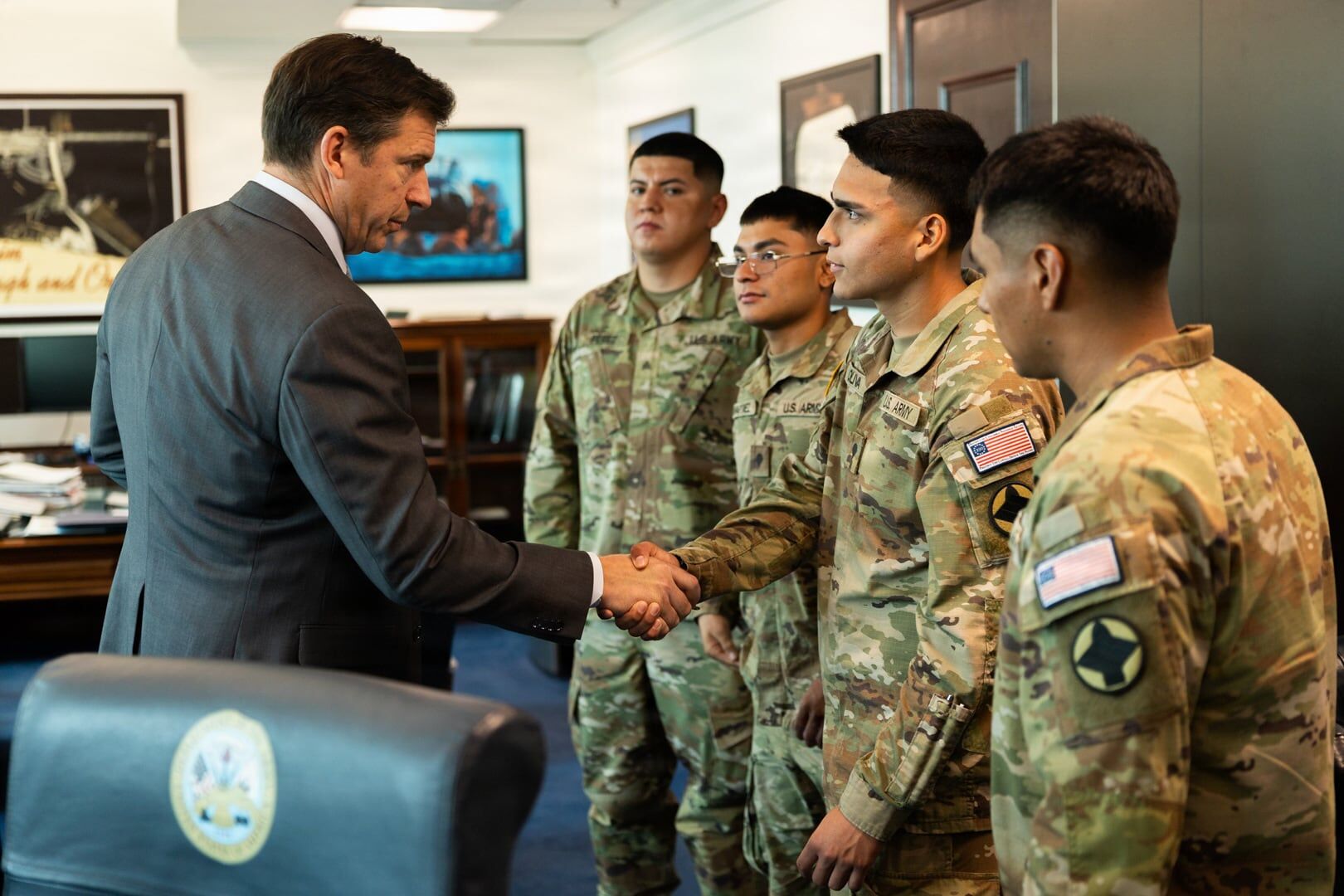
So, it’s certainly very helpful for me when I talk to soldiers or when I look at programs or weapon systems.
The biggest thing it helps me with is understanding that there’s no single weapon system that operates by itself anywhere. They are all part of a joint force, and within that, you have a maneuver Army that is reliant — tanks are reliant on infantry, infantry is reliant on fires, all of it is reliant on aviation, medical and logistics.
All those components work together as a chain, and you have to make sure every link in the chain is as strong as possible.
That’s one of the biggest things that I take away from being in the military: an understanding that all of these things have to work in synergy, and there are no easy solutions.
We continue to watch the conflicts in Ukraine and Iran unfold. What do you expect to see at an event like AUSA that reflects what America has learned from them?
If you walk around the hall at AUSA, it’ll give you a good indication of the Army’s priorities. Our priorities are reflected in what we’re procuring.
Going back several years, when we were in the Middle East and we first saw adversary drones — counter-drone systems became a really important topic. It kind of started in the special operations and then expanded into the larger Army.
Ukraine has not just reinforced that counter-UAS is a critical part of operations today; it’s cemented it.
So, if you walk around AUSA, you’re going to see an immense number of not only drones but also counter-UAS. That’s a reflection of the procurement and the budget, not just in the Army but in the Pentagon.
That’s number one. Number two is software. Being able to see, sense and integrate to understand what your positional advantage is, and understand the adversary and their vulnerabilities.
That’s just military operations, but today it’s looking at how we apply the best sensors and best software to bring all of that together to give decision advantage to our commanders.
The third one is fires, and when you look at current conflicts, the importance of long-range precision fires is highlighted.
So, what you’ll also see at the conference is a reflection of our investment portfolio in our magazine depth, but also the variety of munitions.
Expanding out the optionality that commanders have beyond just one or two exquisite munitions, with everything from longer-range artillery, one-way attack and loitering munitions, up into our higher-end missiles.
All of those represent our fires portfolio, but that’s just for offensive operations. When we get into the defensive side, we’ll be seeing everything from ballistic missiles down to Group One drones.
If you look at those three areas — drones and counter-UAS; software and sensors; and the fires portfolio — and were to roll back the clock to AUSA 10 years ago, the difference is remarkable.
At that time, the focus was very vehicle-centric, armor-centric, pieces of kit for individual soldiers. All of those things are important and are continuing to advance, but these newer investment areas represent a noticeable shift in warfare.
These conflicts are obviously influencing the speed of acquisition. But that process includes an emphasis on both cost-friendly and exquisite munition stockpiles. What is the best balance to ensure success?
The conflicts are definitely influencing and accelerating the way the Army — and certainly the broader Department — are innovating, prototyping, procuring and then fielding different capabilities.
If you were to roll back a decade or even less, you would see very traditional models that go from experimentation into writing an initial requirement document, then into prototyping, then selection, then low-rate production and then finally into fielding and high-rate production.
That’s years long. That process is very deliberate, and it built our military to where it is today, which is still the most dominant, but with a number of vulnerabilities because of technical innovation in the commercial market that adversaries are able to take advantage of.
So, where can we compress this cycle and get it more into a process where we ask the commercial industry to experiment on their dime?
A lot of this has to do with private capital being interested in the defense market. They’re making a bet that they can get through some of the experimentation, and then we can follow on with prototyping and quickly get into low-rate and high-rate production before fielding.
Fielding then allows us to get immediate feedback that goes back into industry. That is essentially what had to happen in Ukraine because it’s existential to them.
So, when we say wartime footing, Ukraine is on the ultimate wartime footing, and there are lessons to draw from there. What are the unnecessary steps in the acquisition process? Where can you smartly accept risk?
Probably one of the biggest drivers of speeding things up is acknowledging that we’re willing to accept risk. We know that if we get a tighter innovation cycle, we’re accepting more risk on the battlefield, but we’re also driving down risk on the battlefield because we’re getting it to them much sooner.
So, then we get into how that translates to fires. Exquisite versus low cost. It’s a balance, or a high-low mix, essentially, where we have to have both offensive and defensive exquisite weapons.
We have to have certain stockpiles to be able to counter the exquisite weapons of our adversaries and have our own effects. Then you get into mass, which comes when we start going beyond the first few days of a conflict, and we’re in protraction. We have to have affordable mass. The cost curve needs to come back in our favor.
While balancing the above, how much of a difference has the surge in domestic manufacturing made in having these pre-positioned elements assisting efforts?
A massive difference.
The Infantry Squad Vehicle is a perfect example. That’s a Chevy Colorado chassis; the drivetrain and suspension are a little different, but it’s nothing unusual.
Essentially, it then goes to a detailer that puts the military-specific equipment on top of it. It’s everything that we need it to be.
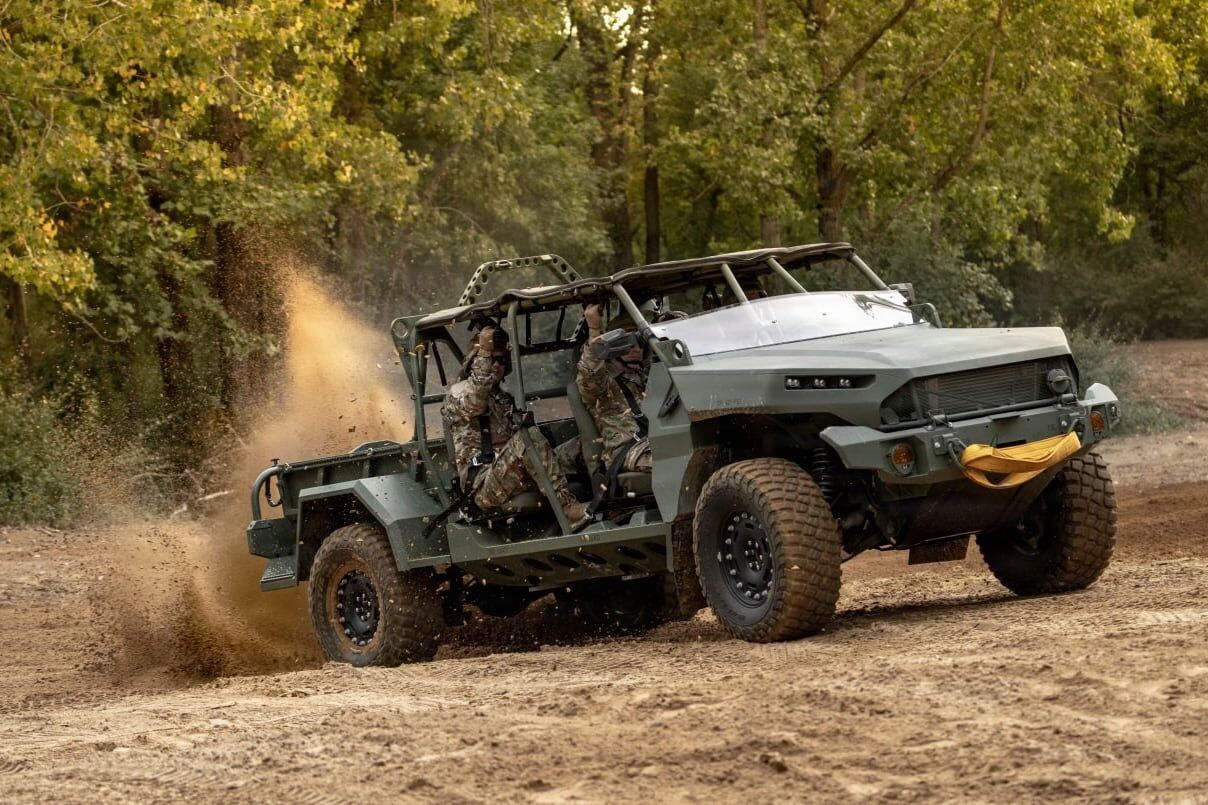
As with anything, it has its vulnerabilities. We’re sacrificing heavy armor and survivability, which we needed throughout the GWOT years, for mobility, transportability and ease of repair.
But using this model also allows us to sustain it far more easily because so many of the components are commercial.
It especially matters when you get into keeping the ISV — or domestically made equipment — in the decades ahead and needing improvements over the years. With the ISV, as Chevy makes improvements to its chassis and drivetrain, that immediately feeds back into the production line of ISVs.
So, we’re now getting upgrades that are just byproducts of the commercial market.
With acquisition, there’s a major emphasis on AI. What are you discussing with tech companies to ensure the human-in-the-loop element equates to maintaining final say despite the speed of the tech?
Every company that deals with this emerging technology and the military is of the same mindset, which is that the human-in-the-loop factor has to be the default.
There are workflows and cycles that human commanders can say, “I need this to run in the background, and I don’t need to see it or be on it.” But when it comes to kinetic kill chains and making decisions on the battlefield, the workflows that enable commanders have to have very hard stops.
It’s not just a commander saying yes or no. It’s far more complicated and nuanced. It’s presenting options based on a tremendous amount of computing analysis and saying, “Here are all the courses of action based on the priorities that you gave, based on the environmental factors that the agents have been able to ingest and all of the long-term planning that goes into it.
That allows the commanders to then take highly complex tasks like mission planning and distill it down into areas where they can consume it more easily, and then apply what only humans can do, which is context and reason.
That context and reason part is what the tech companies that work with us are very focused on enabling, as opposed to taking over entire workflows.
Autonomy is important, really, in three areas when it comes to warfighting.
Think about combat breaching. That’s one of the most dangerous things we ask a human to do: to breach a linear minefield or barrier. If we can automate that, that removes something inherently dangerous.
The second is highly complex, like command and control. How do you distill what would take human staff officers hours or days into seconds, and give a commander not only several options, but the analysis behind it and the confidence in the product being presented?
The third is the ability to remove repetitive and mundane things human soldiers are doing. Resupplying via trucks, for instance. If we can automate that, we are removing that task from our logistics soldiers and allowing them to apply their talents to solving real problems with a clear vision and mindset.
Beyond weapon systems, something as simple as staging — or hiding — equipment or personnel requires a vastly different strategy than even 10 years ago. How does something as simple as saying, “How do we hide this helo?” impact your conversations with industry?
It’s not something that we’ve had to truly consider as an Army for 40 or 50 years because we were guaranteed air superiority.
We don’t have air superiority at this point because of long-range fires and precision targeting from space.
So, you go back to dispersion, displacement of assets and disaggregation of large headquarters. As you remember from recent decades, a division headquarters would be a massive entity with satellite dishes and other assets in the open. Those days are gone.
We now have to consider how we bring in technology from the companies to allow us to displace 10-foot satellite dishes and 20 miles of wire, and actually have small-scale edge compute and transport systems that can disaggregate everyone. That’s incredibly important.
Certainly, camouflage comes into play. Other classified capabilities come into play as well, and that’s all just the visible element. Then you get into electronic warfare and the ability to monitor.
So, how do you disaggregate some of that?
Those are all things that we are actively moving — and coming back to — in a more modern stance.
J.D. Simkins is Editor-in-Chief of Military Times and Defense News, and a Marine Corps veteran of the Iraq War.