
Disrupt, Strike, Assault and Endure: The 4 pillars of the US Army’s new warfare guidance
Disrupt enemy command and control. Hit enemy forces with firepower, then assault with ground troops to finish the job. And be resilient enough to function despite what the enemy dishes out in return.
That’s the essence of “How The Army Fights,” a new 46-page guide on how the U.S. Army can leverage the tactical to improve the operational.
“While [How The Army Fights] is focused on the operational and strategic levels of war, it will affect how tactical units execute warfighting at echelon,” according to the guide, issued by Army Vice Chief of Staff Gen. Christopher LaNeve.
How The Army Fights, or HTAF, is a farewell to the small-unit counterinsurgency warfare that shaped Army organization, equipment and structure for nearly two decades.
“These experiences created a generation of units that rarely had to maneuver under a contested sky, mask their electromagnetic signatures, or sustain high-tempo operations without contractor support,” the guide states.
Now, the Army’s operational concept is Multidomain Operations, or MDO, which features big-unit maneuver warfare waged by divisions and brigades rather than platoons and squads.
The guide represents an acknowledgement that the last thing the Army — or the American public — wants is the sort of stalemate seen in the Ukraine war. In that conflict, drones and long-range guided munitions dominate the battlefield to such an extent that maneuver has become the exception rather than the norm.
“Only ground maneuver can seize what the enemy holds and secure it against the enemy’s will,” the HTAF manual emphasizes.
To enable maneuver and the possibility for strategic victory that maneuver offers, HTAF highlights the importance of “the four elements of Army land power”: Convergence, Strike, Close Battle and Endurance.
During Convergence, U.S. forces disrupt enemy command, communications and sensor systems, according to the document.
For example, “a commander executes a kinetic strike against an adversary command post while electronic warfare assets jam backup communication systems,” HTAF states. “Concurrently, long-range artillery targets an enemy radar exposed while illuminating friendly aircraft, while friendly space and cyber capabilities degrade the broader integrated air defense network.”
The Strike element calls for the Army to unleash a variety of munitions, including artillery, rockets, missiles, one-way attack drones and loitering munitions.
“Strike acts as the deep operational shaper, employing medium- and long-range precision fires and uncrewed systems to disrupt, degrade, and dislocate enemy forces and logistical assets before they can influence the close fight,” the document states.
If Convergence and Strike phases achieve the objectives of leaving the enemy dazed and blinded, Close Battle can begin.
Throughout history, battles have culminated with troops advancing to destroy the enemy. But HTAF acknowledges the unprecedented difficulty of a modern battlefield where drones appear to see all and enemy fires can rain down at any moment.
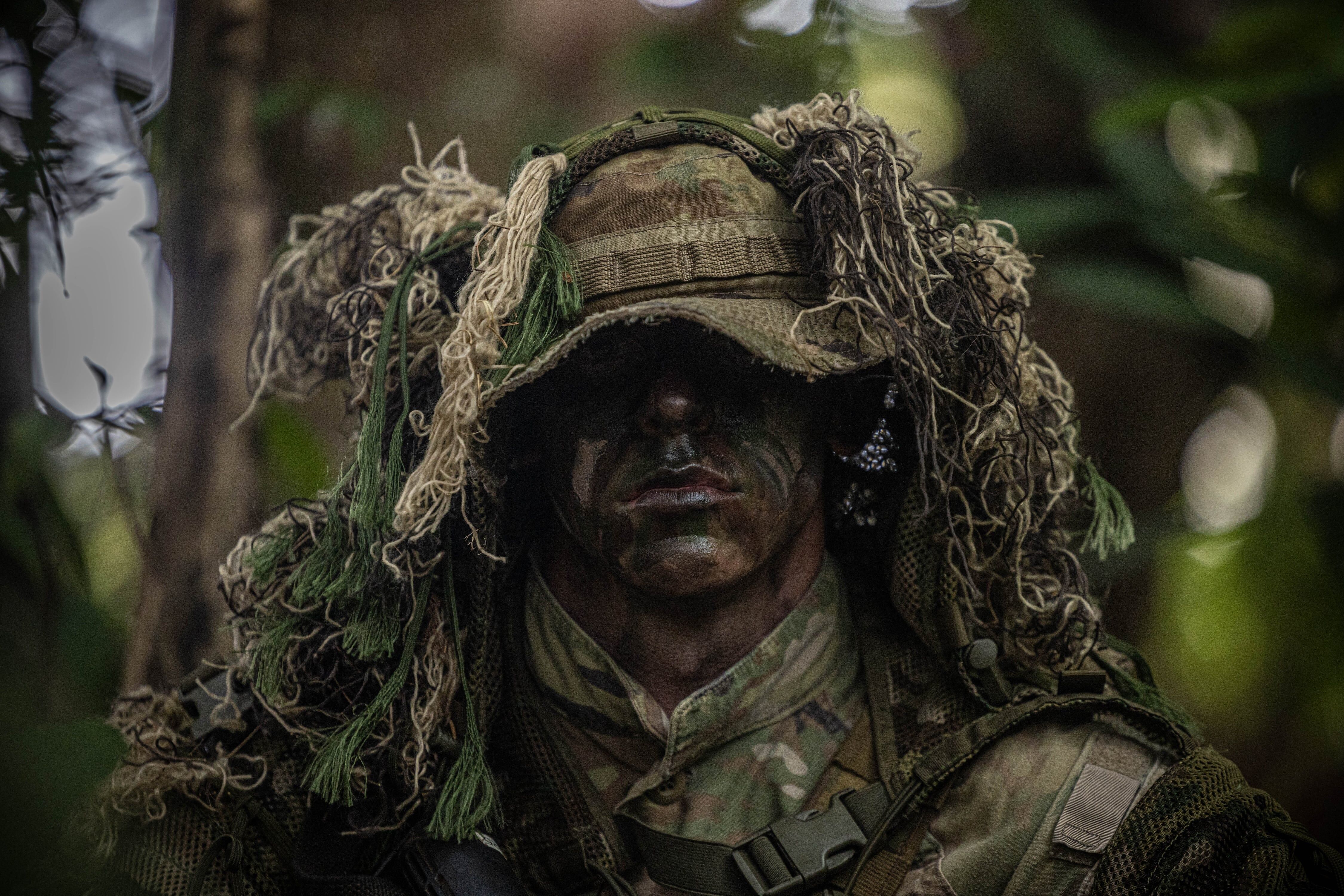
Army units will therefore need to be adept at camouflage and deception, and possess their own defensive weapons against drones and other fires, HTAF states.
“Close Battle is built on highly lethal ground maneuver formations that cannot be formed over short periods of time,” the guide reads. “They are built on years of rigorous training, institutional expertise, and leadership.”
The Army’s ability to function despite enemy fire, particularly when it comes to logistics, is especially vital. This has become a significant issue throughout the Iran war, with strikes by the Islamic Republic on numerous U.S. bases in the Persian Gulf forcing American aircraft to rebase, and ships to sail thousands of miles to seek replenishment.
The Endurance aspect of HTAF involves protecting supply depots, medical facilities and vital infrastructure against enemies that have built anti-access/area denial, or A2/AD, capabilities to keep American forces at bay.
“This requirement is even more pronounced today: the absence of sanctuary across any theater of operations underscores the critical necessity of interior lines,” the guide states.
This also means ensuring that supplies can reach troops on the front lines.
“To achieve Endurance and sustain dispersed forces in contested environments, the Army must operationalize autonomous ground, aerial, and littoral distribution platforms to scale throughput while minimizing human exposure in high-threat corridors.”
Significantly, HTAF stresses the need for the Army to forward-deploy capabilities close to potential combat zones to enable troops to act immediately rather than await reinforcements from the U.S.
“Near-term priorities include constructing bulk fuel and munitions storage, stockpiling supplies, improving contingency sites, and establishing an enduring command-and-control architecture to neutralize the pacing threat’s A2/AD networks,” according to the guide.
HTAF also envisions troops making and fixing their own equipment at the forward edge, including “additive manufacturing and secured ‘right-to-repair’ authorities” that will spare the need to transport items from factories and depots thousands of miles away.
The document points to the importance of the Army’s plan to expand and modernize its organic industrial base: the 23 government depots, arsenals and ammunition plants that produce many crucial items.
“This ‘agile facilitation construct’ will allow production of numerous different finished products and repairs, evolving beyond historical ‘one plant, one output’ industrial models,” the guide states.
Similarly, the contractors in the U.S. defense industrial base must be prepared to surge production if needed.
“The industrial base must develop rapid replenishment solutions rather than relying on peacetime schedules,” the guide says.
Still, HTAF takes care to laud the human component.
“At the center of our operational elements remains the individual soldier. Advanced technology, uncrewed systems, and autonomous networks optimize kill webs, yet they can never replace the human judgment, tactical discipline, and physical courage of the soldiers executing the fight in the mud.”
Michael Peck is a correspondent for Defense News and a columnist for the Center for European Policy Analysis. He holds an M.A. in political science from Rutgers University. Find him at theuncommondefense.com. His email is mikedefense1@gmail.com.