
Estonia weighs buying light jet aircraft to shoot down Russian jet-powered drones
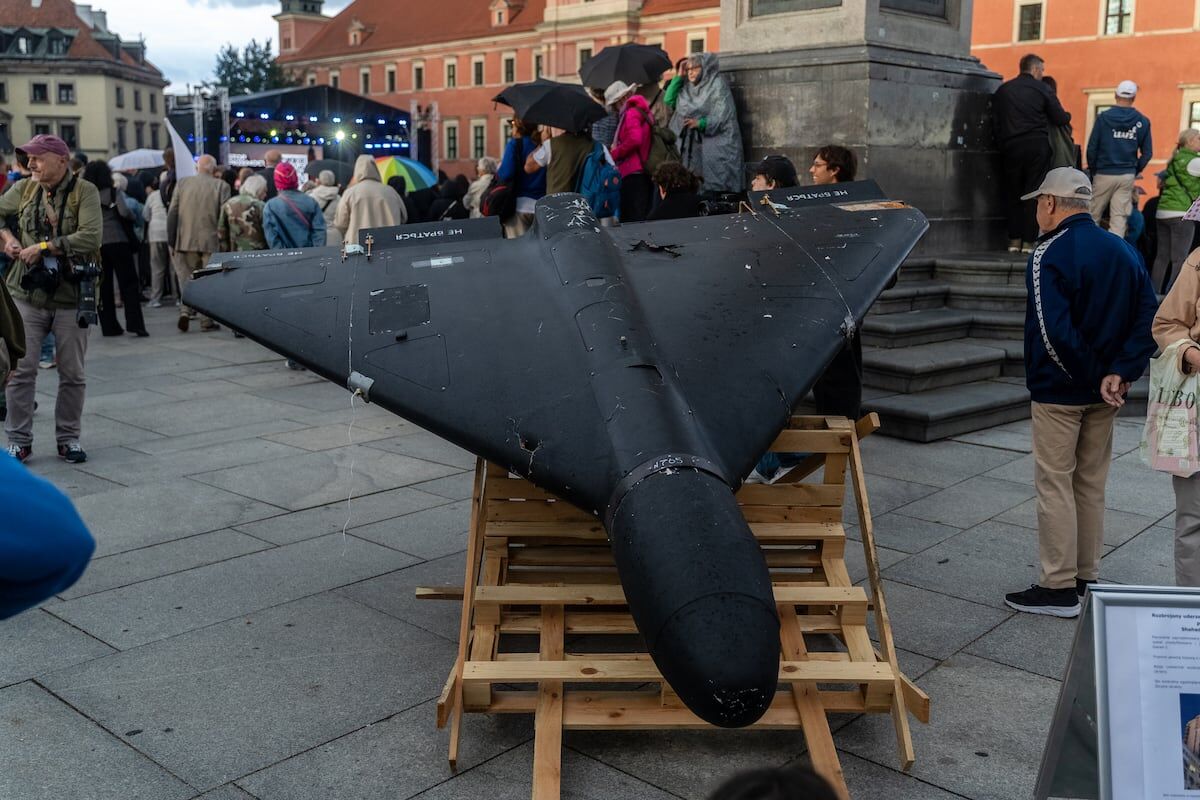
VIENNA — Estonia’s new defense minister said his country should consider buying light jet aircraft to shoot down Russia’s faster, jet-powered attack drones.
Martin Herem, a retired general who took office Sept. 16, floated the idea in interviews after meeting Ukrainian President Volodymyr Zelenskyy in Kyiv. He told The Baltic Sentinel and the daily Postimees that Estonia should study the option, saying air-to-air weapons are the most effective counter to the drones.
He gave no aircraft type, budget or timeline.
Herem has not committed to buying anything. He told The Baltic Sentinel he is also looking at computer-controlled cannons, heavy machine guns and fast, jet-powered interceptor drones. He noted that Estonia already has pilots, air-control expertise and L-39 trainers.
The two L-39 Albatros trainers Estonia uses are leased, according to the Estonian military’s website. Their civilian status and lease terms would complicate any move to arm them, the former head of Estonia’s air force said back in April.
The proposal responds to a threat that is growing fast. Yuriy Ihnat, a Ukrainian air force spokesman, said Ukraine intercepted about 40% of jet-powered drones in July and 60% in August, according to Hromadske. In the same period, the number of jet-powered drones fired at Ukraine increased from a few hundred to several thousands a month. Ukraine’s defense ministry puts their speed at more than 400 kilometers per hour.
None of the three Baltic states have their own fighter fleet. NATO allies police their skies on rotation, and allied jets have shot down drones over Latvia in June and over Lithuania on Sept. 15. Estonia’s air-policing rotation currently includes Turkish F-16s at Ämari. Spanish F-18s were scheduled to depart after their rotation in “early October,” according to the Estonian military.
Neither Latvia nor Lithuania have floated buying jet aircraft of their own. Both are putting money into cheaper counter-drone layers instead, and Latvia is considering the Embraer’s A-29 Super Tucano, a light turboprop fighter aircraft, for air-defense missions.
Lithuania’s government on Sept. 2 authorized the defense ministry to skip standard procurement rules to buy trial batches of interceptor drones and radars. Defense Minister Robertas Kaunas said Vilnius would favor systems already tested in Ukraine. Lithuania is also testing Ukraine’s SkyFortress acoustic detection system.
Latvia is building what State Secretary Airis Rikveilis called a “wall of drones” on its eastern border. It will combine radars, interceptor drones and command equipment.
NATO planners have repeatedly said that using heavy fighters against small drones is disproportionately expensive. Interceptor drones and ground-based air defenses often cost substantially less to procure and to operate.
Linus Höller is Defense News’ Europe correspondent and OSINT investigator. He reports on the arms deals, sanctions, and geopolitics shaping Europe and the world. He holds master’s degrees in WMD nonproliferation, terrorism studies, and international relations, and works in four languages: English, German, Russian, and Spanish.