
Killer balloons an option as US Army seeks to ‘exploit the stratosphere’
On the heels of an experimentation ramp-up that has seen the U.S. Army’s high-altitude balloons deployed to Europe, the Pacific and the Middle East, a missile defense official said Wednesday that all options were on the table as the service seeks to make the most of the capability.
Col. Joseph Mroszczyk, director of U.S. Army Space and Missile Defense Command’s Transformation Integration Directorate – Space Superiority (TID-SS), said in a briefing with reporters Wednesday at the Association of the United States Army’s annual meeting that he was pushing for “a family of stratospheric systems” that included high-altitude balloons of all sizes.
“What that enables us to do is provide space-like capabilities, really exploiting a transition point between what is normally considered the aerial layer and the space domain,” Mroszczyk said.
“That operational space allows some persistence and broad coverage in an area where you can deliver space-like capabilities in terms of payloads, but then also take advantage of the deep access that you get from the stratosphere … being able to go and take advantage of winds that are pushing you where you want to go already, to be able to get either launched effects or other types of payloads for sensing and communication and extension of your launched effects portfolio.”
While using balloons as shooters, as Ukraine has reportedly done, likely presents a bigger set of challenges than using them for sensing, Mroszczyk said nothing was off the table.
“I wouldn’t say that we’re going to hold back from opportunities and options that would include something that could be kinetic in nature,” he said. “But right now, we’re doing experiments across the board with all types of different payloads.”
The stratosphere is the layer of Earth’s atmosphere above the lowest layer, the troposphere. The Army uses the term to refer to the stretch from about 60,000 to 100,000 feet, or 11 to 19 miles above Earth. On Wednesday, Mroszczyk invoked the term “space littorals” to describe the band, referencing the Navy’s language for the shallow waters nearest the coast.
High-altitude balloons are not a new military concept. Famously, a Chinese balloon drifted into U.S. airspace in 2023, raising national security alarms and leading to the discovery of several previous incursions that had gone undetected.
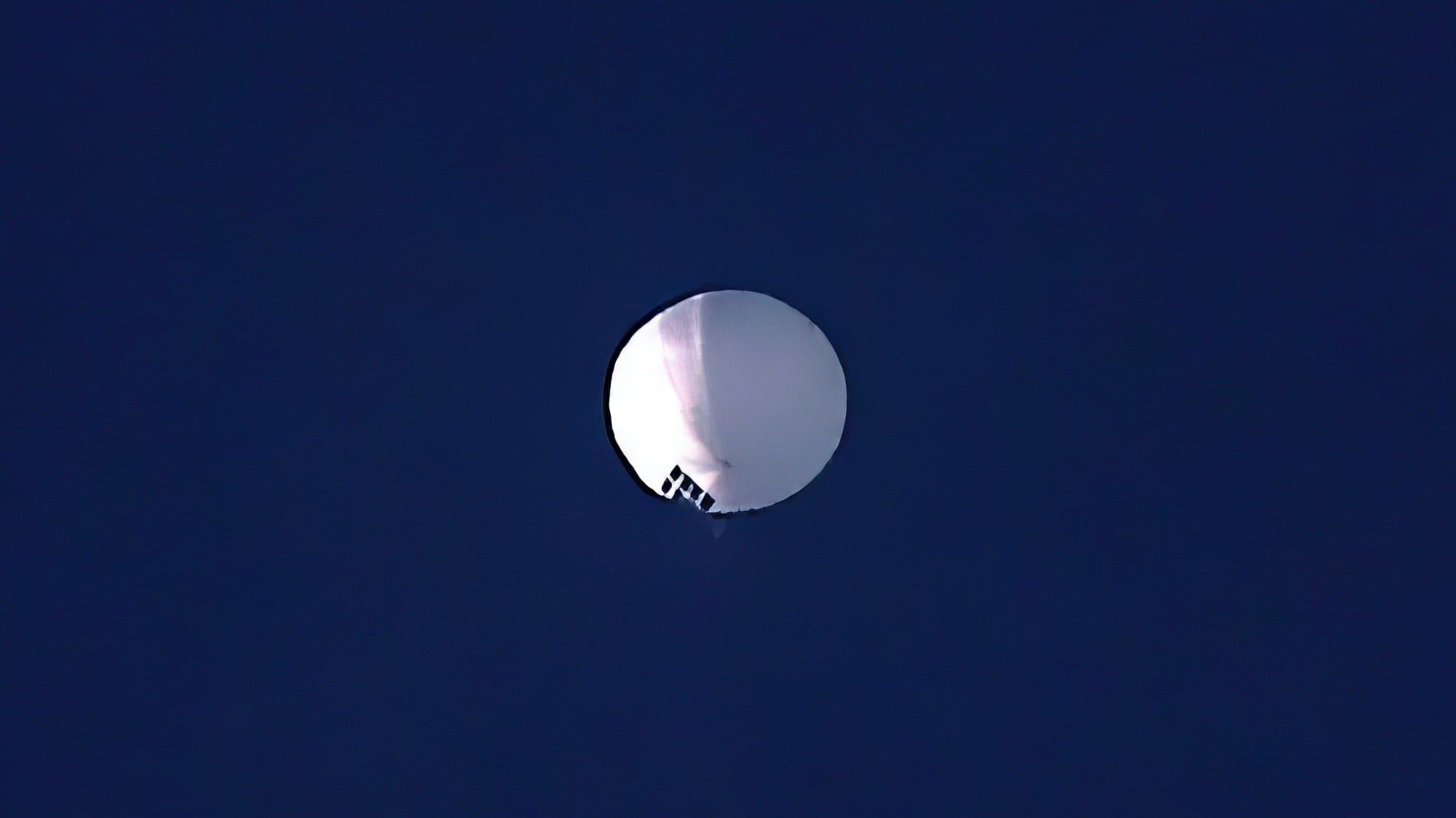
A 2019 Army University Press article extolled the potential of military balloons as space operations came to the forefront.
“Intuitively, balloons at such heights could perform missions such as intelligence, surveillance and reconnaissance, communications, missile warning, and precision navigation and timing,” Lt. Col. Anthony Tingle wrote. “As the space domain becomes increasingly precarious, balloons offer resilience and redundancy against overhead capability shortfalls.”
The Army’s current interest in the balloons and their potential is unprecedented, though.
In the briefing on Wednesday, the commander of U.S. Army Space and Missile Defense Command, Lt. Gen. John Rafferty, said the systems had been deployed for testing and demonstration to Europe, the Pacific and Morocco.
Breaking Defense reported further about the balloons’ presence in the Middle East this week, citing officials who said small swarms of a few dozen drones were deployed in the region for testing after a plan to do a much larger demonstration in the Pacific was scrapped.
The commander of the Army’s 3rd Multi-Domain Task Force, Col. Wade Germann, told Military Times earlier this week that his unit was actively developing new operating concepts for the balloons.
“We work them in a format called constellation approach, where we’ll put a couple of the high, high-end, really exclusive ones up there with different payloads and systems on them,” Germann said. “And then we’ll work in a different venue where we’ll look at cheap, very expendable, rapidly employable, in that you can put up hundreds at a time and create multiple dilemmas for the enemy on.”
Germann said the Army was working with industry to develop the most useful capabilities and determine not only the right payloads, but the right lifting gas and launch methodology.
“That’s the way that we’re working with our partners out in the field to gain that real-time feedback and make these things happen,” he said.
Over the course of the coming year, Mroszczyk said, the Army planned to conduct multiple balloon experiments aimed at determining the best ways to “exploit the stratosphere.”
Rafferty said seeing the balloons in action had turned him into a “huge believer” in their potential.
“Every time they are demonstrated in the Pacific or in Europe, there are more and more; they gain more and more support,” he said. “So we’re, I think, really excited about this next year, about what we’re going to do to further the program.”