
Reprogramming robots in the mud: How Army Special Ops trains its new robot technicians
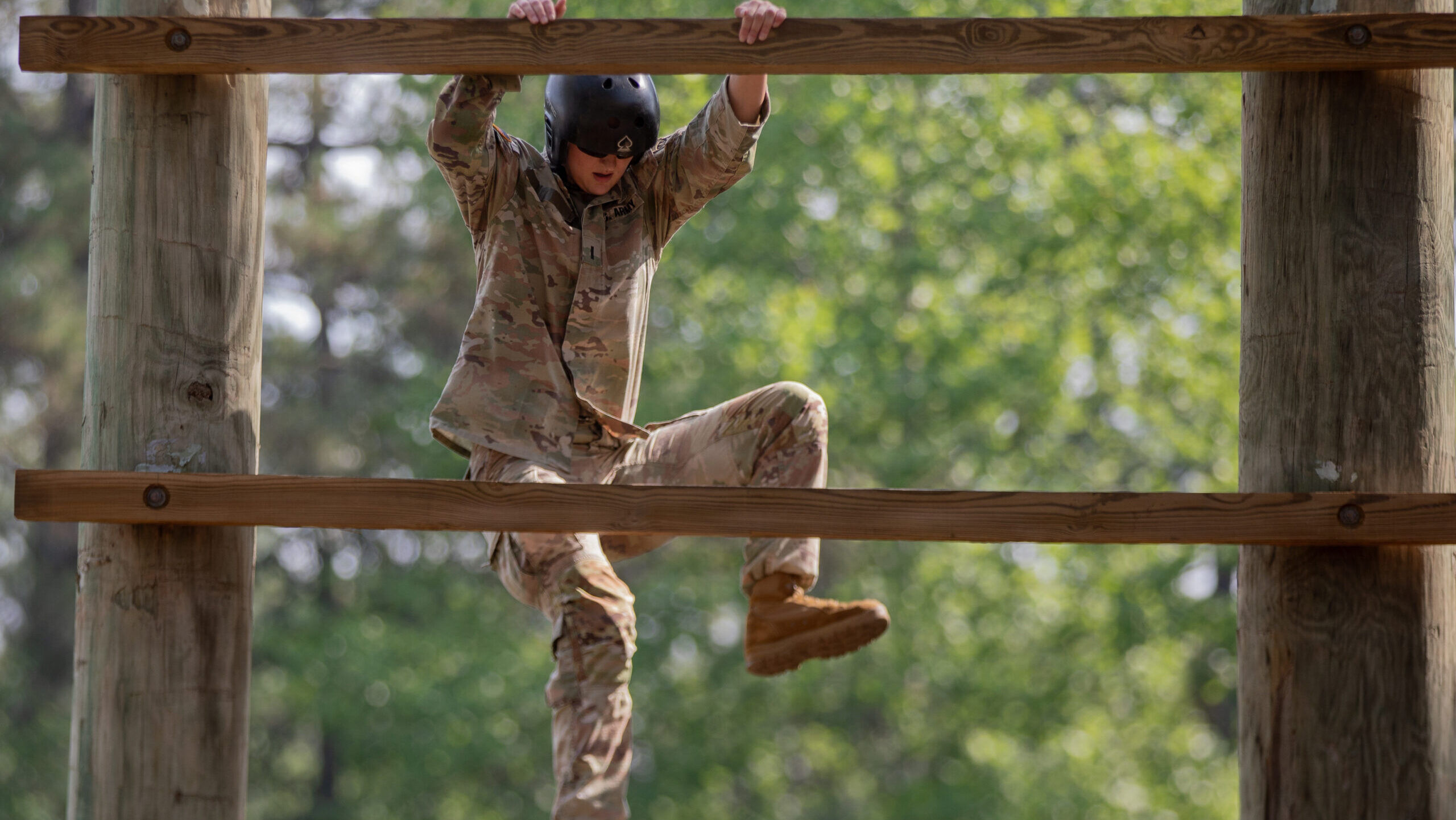
WASHINGTON — As the US military reorganizes to rapidly deploy new drones and other unmanned weapons, the Army’s special operations school is building a cadre of expert warrant officers to wrangle the robots on the battlefield: Military Occupational Specialty 390A, Robotics Technicians.
“If you really want to understand what a 390-Alpha is, what these warrant officers are capable of, I invite you out to Clarke Range, Alabama, during the first week in November,” said Maj. Gen. Jason Slider. That’s when the second-ever class of MOS 390A candidates will conduct their final field exercise. Inspired by lessons from battlefields in Ukraine, the Caucasus, and the Middle East, the wargame will stress-test the candidates’ capability to improvise under fire, he explained.
“What we’re building is a soldier that can adapt a piece of robotic kit to the mission, to the enemy, to the terrain,” Slider said.
Slider commands the Army’s John F. Kennedy Special Warfare Center and School (SWCS), which graduated its first class of MOS 390A soldiers just two weeks ago. He and one of his chief aides, Chief Warrant Officer Michael Updike, spoke about the new program Tuesday at a GovExec event on the sidelines of the annual Association of the US Army conference.
As the simulated enemy presents a changing range of threats, the candidates will have to rethink their tactics and reprogram their robots on the fly, in the field, and under stress, Slider and Updike explained. Electronic warfare will scramble their radio control links, block GPS, and cut them off from cloud-based AI coding tools, forcing them to rely on only the technology they can bring with them and get to work in the mud.
“When everything goes black … they still have to be able to reach back into their toolkit and bring out those [programs] to put into the Raspberry Pi to get the robot to do what it needs to do,” Updike said. In the first class’s final exercise earlier this year, for example, the students fit a quadcopter with a $1,000 HD camera and connected it to a decentralized mesh network, enabling the data to route around jammed nodes.
“They have to do all that innovation in the field,” Updike emphasized, “without large models that are connected to the internet.”
Large Language Models, cloud-based services in general, and even GPS navigation are frequently jammed on battlefields in Ukraine. Even when they are available, soldiers must take care, lest their radio transmissions reveal their location to the enemy and bring down a devasting precision strike. The “final crucible” exercise at Clarke Range reflects that grueling modern battlefield.
“We had specifically designed this capstone exercise to drive failure,” Slider said. “[It] gives the students another opportunity to try — and maybe fail again.”
It’s crucial to understand what 390A soldiers are and what they aren’t, Slider emphasized. They’re not drone operators, although they can operate drones. They’re not programmers, although they can code, often using miniaturized AI tools small enough to run on a ruggedized laptop in the field. Instead, these warrant officers are technical experts who stand between the commissioned officers, who command the force, and the enlisted personnel, who specialize in operating specific systems.
The 390As act as “system integrators,” Updike explained, with both deep and broad understanding of different Army drones, ground robots, networks, and how they work together. Above all, the 390As are trained to adapt, modifying that array of interdependent systems to meet new threats.
“We looked at Nagorno-Karabakh and Ukraine, and we’re studying the ongoing conflicts in the Middle East,” Slider said. “We learned … units that that solely focus on pilots quickly lose the advantage to an adversary or an enemy force that can adapt.”
That adaptation can’t be solely technological, either, he said. It must encompass tactics and sheer human resilience as well.
“All the tech that we’re talking about is, I think, important, and it’ll help get the soldier to the objective,” Slider said. “But it’s always been true that the soldier has got to be really comfortable in the mud … closing with the enemy and finishing the fight.”