
The most important alliances will lead to critical minerals
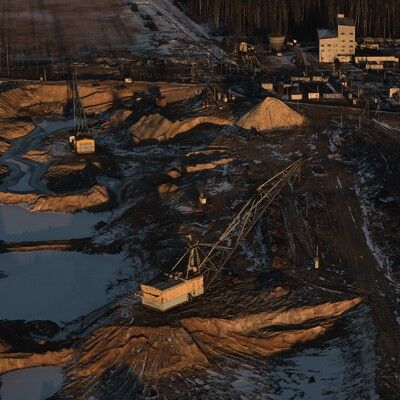
The raison d’être of the “Concert of Europe,” the preeminent compact between the great powers of the 19th century, was to maintain the balance of power and suppress revolutionary movements. The post-World War II alliance systems sought collective security and deterrence. And the most relevant alliances of the 21st century will be the ones that secure the materials needed for key armaments and new technologies.
In the first decades after the Cold War, the global economy seemed to settle on a dispensation that was heavily digital, light on assets, and tilted toward “just-in-time” manufacturing. It also leaned on heavily financialized business models that privileged services, software, and ever smaller and faster microprocessors.
Then came what American mining entrepreneur Robert Friedland dubbed the “revenge of the miners.” Emerging technologies—starting with electric vehicles and running through data centers and artificial intelligence—required prodigious quantities of material inputs from bulk metals to rare earth elements. And so did modern conflicts, from Russia’s war on Ukraine to the American-Israeli conflict with Iran.
The physical economy is back, and with a vengeance. Years of underinvestment and long lead-up times mean that surging global demand will exceed supplies of most critical minerals for the foreseeable future.
Further exacerbating the challenge for many countries, especially the United States and its traditional allies, is the dominant position that a single country, China, has painstakingly consolidated in the global production and processing of many critical minerals. It produces up to 98 percent of the world’s processed gallium and germanium, 95 percent of its refined magnesium, more than 90 percent of its rare earths and battery-grade graphite, 80 percent of its cobalt and tungsten, and 70 percent of its titanium. China is even the top producer of several metals that are mostly mined elsewhere.
The military effects of this commercial advantage are highlighted by this year’s conflict in the Middle East. One study by researchers at the Payne Institute for Public Policy at the Colorado School of Mines looked at the first 96 hours of combat after the war was launched on Feb. 28. In that period, the scholars estimated, U.S. and Israeli forces deployed 5,197 offensive and defensive munitions, consuming some 2,197 kg of cobalt and 11,444 kg of tungsten—materials of which China controls roughly 80 percent of the supply. (Remember that, unlike metals used in buildings or other manufactured good, metals used in armaments get only one use and cannot be readily recovered or recycled.) The much-discussed challenge of replacing the Pentagon’s depleted arsenal is not only about production facilities but about the materials they need.
The need to reduce this dependence on a geopolitical competitor was the impetus behind President Trump’s Executive Order 14415. It restricts defense contractors’ use of waivers to source critical minerals and other material inputs from foreign adversaries, expanding oversight over supply chains of subcontractors. It also instructs the Secretary of War to fast-track efforts to identify alternatives and other remedies to supply-chain gaps.
Nor is defense materiel the only driver of demand for critical minerals. The AI revolution has turbocharged competition for some two dozen minerals for everything from power infrastructure (prices for copper, for example, hit near-record highs in early September) to transformer cores where grain-oriented electrical steel has been identified as an especially constrained enabling material, while shortages of gallium, germanium, graphite, lithium, cobalt, and rare earths threaten both chip manufacturing and the buildout of data centers.
The U.S. administration’s concerns about supply-chain vulnerabilities are shared with some of America’s closest allies, with the leaders of the G7 striking an urgent tone in the joint declaration on securing supply chains for critical minerals coming out of their June summit in Évian-les-Bains: “In light of the high degree of market concentration, the need to reduce vulnerabilities regarding those resources and the growing use of arbitrary trade restrictions, we recall the urgency of diversifying our supply chains and building our collective resilience.” Moreover, in a marked departure from the past G7 communiqués on the subject which tended to be long on platitudes and short on substance, the group committed to specific quantifiable targets for reducing its members’ dependence on the unnamed “single supplier outside the G7 and partner countries” whose “use of non-market policies and practices and economic coercion, including arbitrary export restrictions and retaliatory measures on critical minerals and their related dual-use items” threaten the security of G7 to less than 60 percent by 2030 for REEs and permanent magnets and thereafter to half “as soon as possible.”
This undertaking will not be easy and is only possible as a collective effort to develop resources where they can be found among friends (or, at least, non-adversaries), supporting processing value chains, and incentivizing production through the judicious use of guaranteed offtake agreements. Success for any alliance will be predicated on its expanding the political geography. While Australia, Brazil, and South Korea were included in the G7 discussions this year, noticeably absent was anyone from Africa, the continent being home to one-third of the earth’s mineral resources, including a majority of some key minerals like cobalt, manganese, and the platinum group metals. Success will depend as well on embracing new technologies to increase production. Infrastructure, too, is the key to unlocking bottlenecks in global critical minerals supply chains, while cultivating numbers of qualified personnel is essential to optimizing the transformation of raw ores into high-purity materials as is the availability of reliable, cost-effective energy at massive industrial scale for all the steps from crushing and grinding to chemical separation and thermal refining—all requirements which in turn will shape the composition of alliances for strategic materiel.
At the start of the Cold War, American journalist Walter Lippmann famously described alliances as resembling chains. Prevailing in the 21st century’s struggle for geopolitical and economic advantage will require forging new links to build a chain that is strong, seamless, and resilient.
Ambassador J. Peter Pham, former U.S. Special Envoy for the Great Lakes and Sahel Regions of Africa and a distinguished fellow at the Atlantic Council, is Executive Chairman of Ivanhoe Atlantic.
This commentary is published in coordination with the 2026 Global Security Forum, of which Defense One is a media partner