
US Army’s 8th Psychological Operations Group inactivated
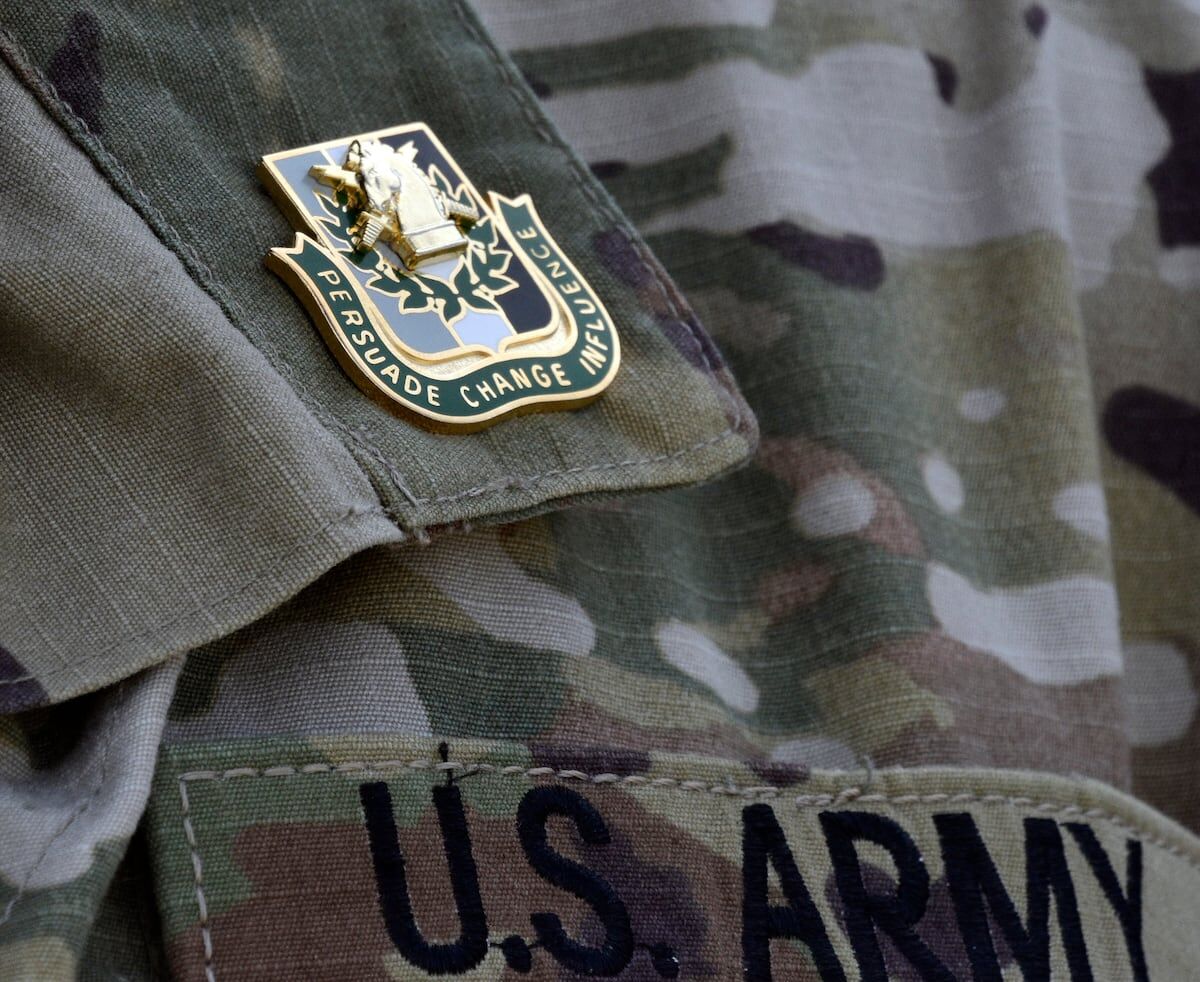
The Army officially inactivated the 8th Psychological Operations Group (Airborne) in a ceremony at Fort Bragg, North Carolina, on Sept. 29.
“I could not be prouder of the men and women that stand before us today and those that came before us to inactivate the unit,” Col. Robert Cusick, the group’s commanding officer, said. “8th PSYOP Group introduced new concepts that will remain for years to come.”
8th POG, nicknamed the “Phantom Knights,” was formally activated on Nov. 16, 2013, after operating provisionally for two years. It was one of four Army PSYOP groups, including the active-duty 4th Psychological Operations Group (Airborne) and the Army Reserve’s 2nd and 7th Psychological Operations Groups.
The term “inactivation” signifies that the group is being decommissioned for an indeterminate period during some form of restructuring and reorganization — not necessarily that it is being deactivated or dissolved.
The 8th POG included the 3rd PSYOP Battalion (Airborne) and the 9th PSYOP Battalion (Airborne). The 3rd POB influences print, radio and broadcast information operations around the world, while the 9th POB is typically involved in operations like dropping leaflets and cultivating local communities where Special Forces may be operating.
The Information Warfare Center, organized in 2020, was also under the aegis of the 8th PG. The IWC combines intelligence operations and information warfare specifically for Army Special Forces.
The inactivation comes just two months after the Army activated Delta Company, 7th Psychological Operations Battalion. The 7th was previously assigned to the 4th Psychological Operations Group (Airborne) but is now under the 3rd Special Forces Group (Airborne). That group is focused on psychological operations primarily under U.S. Africa Command’s purview.
Some military officials and analysts have argued that the U.S. needs to overhaul its approach to psychological operations and information warfare groups — hence the Delta Company activation and the retirement of the 8th POG.
“What is most concerning is not simply that adversaries invest in information warfare, but that they can often employ it faster and more coherently than we can respond,” Maj. Ryan Walters, an active-duty U.S. Army Psychological Operations officer, wrote in Small Wars Journal in January. “In practice, adversaries win by compressing the time between sensing, shaping, and exploiting, while U.S. forces remain constrained by approval latency, fragmented execution, and inconsistent assessment. The result is a temporal mismatch in which effects arrive after decisions are already made.”