
Military power rising as power of diplomacy falling, diplomats, crisis monitors, allies say
DOHA, Qatar–International norms and humanitarian law are losing influence just as new military capabilities are becoming easier to access—a central theme of two days of talks among diplomats, government officials and humanitarian workers here.
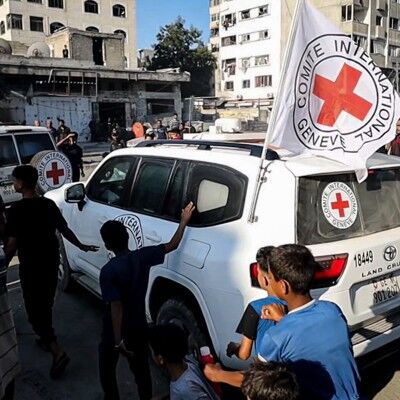
“Conflicts are now a first resort in many cases. Diplomacy and dialog are being delegitimized,” said Pierre Krähenbühl, director-general of the International Committee of the Red Cross.
Krähenbühl was far from alone in his assessment at the Global Security Forum, hosted in this Gulf capital by the Soufan Center and the Qatar International Academy for Security Studies. Officials from Europe and the Middle East, as well as former senior intelligence officials from Australia and Britain, questioned the durability of the alliance structure that the United States and its Western allies put in place after World War II.
“The war in Lebanon today and on Lebanon shows that there are countries, Israel is a case in point, that do not need alliances, for they are engaged in an offensive war, and alliances in today’s world are largely defensive,” said Deputy Prime Minister Tarek Mitri of Lebanon, which remains partly occupied by Israeli forces.
But that breakdown isn’t happening on its own. Sir John Sawers, former chief of Britain’s MI6 intelligence agency, pointed to the United States’ declining commitment to its traditional security guarantees, even as the 8-month-old U.S.-Israeli war against Iran has exposed American partners in the Gulf to new threats.
Saudi Arabia, Qatar, and the United Arab Emirates are reconsidering their security relationships with Washington, Sawers said.
“The United States was the guarantor of their security. And what of course these countries have experienced in the last six months is the attacks on them have been provoked by a U.S-instituted war of choice against Iran.”
Europe is confronting similar questions as the Russian campaign against NATO grows more brazen and sophisticated. Sawers said America is eroding the international system it helped establish: one of the challenges to the rules-based order is “the United States losing confidence in the system which they designed and which has benefited America enormously.”
Sawers disputed the idea that Europe is rearming simply because of pressure by Donald Trump.
“The reason we’re increasing money on defense now isn’t because President Trump is telling us to do so. It’s because the threat from Russia is much greater than it was before. And the reliability of the United States is less than it was before,” he said.The conference’s host country, Qatar, has found that its longtime efforts to play international mediator no longer keep it safe. The capital came under attack by Israel in 2025, and six months later by Iran.
“It was a surprise because it’s the first time that a mediator has been attacked. This never happened,” said Sheikh Saoud bin Abdulrahman Al Thani, Qatar’s deputy prime minister and minister of state for defense affairs..
Al Thani identified three threats to Qatar: attacks on its sovereignty, disruptions to energy flows from Gulf Cooperation Council countries, and the spillover of regional conflicts.
Tom Barrack, U.S. special envoy for Syria and Iraq, said the United States remained committed to diplomacy and proposed a path out of the regional violence beginning with a ceasefire, reopening the Strait of Hormuz, and easing economic pressure on the Iranian people. But he cautioned against expecting any agreement to resolve the underlying conflict quickly.
“What we know in the Middle East is there’s no such thing as a deal. There’s no event. This process is going to continue,” said Barrack, a billionaire financier who served as a go-between from candidate Trump to Gulf princes during the 2016 campaign.Nick Warner, former director-general of Australia’s Office of National Intelligence and former ambassador to Iran, put the issue more bluntly: “And the answer to how does the war with Iran end is: it doesn’t.”