
US Army long-range fires make a splash on the frontline with China
From Balabac in the southern Philippines to Hokkaido in northern Japan, U.S. Army soldiers have stepped up their training with new long-range weapons along the first island chain, working with allies in exercises that have grown larger and more complex over the past half-decade.
Freed from Cold War-era constraints, the U.S. Army has been upgrading its existing missiles and rocket artillery and developing new, longer-range systems. Those investments are largely in response to the growing size and sophistication of China’s missile arsenal, which the U.S. military worries could deny its forces access to the Western Pacific during a conflict. The intensification of training with the Philippines and Japan reflects a shared concern about China’s military capabilities.
The emphasis on long-range fires in the first island chain is visible in the extended deployments and first-of-their-kind drills involving those weapons, especially the High Mobility Artillery Rocket System. HIMARS can conduct land-attack and maritime-strike missions using guided rockets with ranges of a few dozen miles or ballistic missiles with ranges of a few hundred miles.
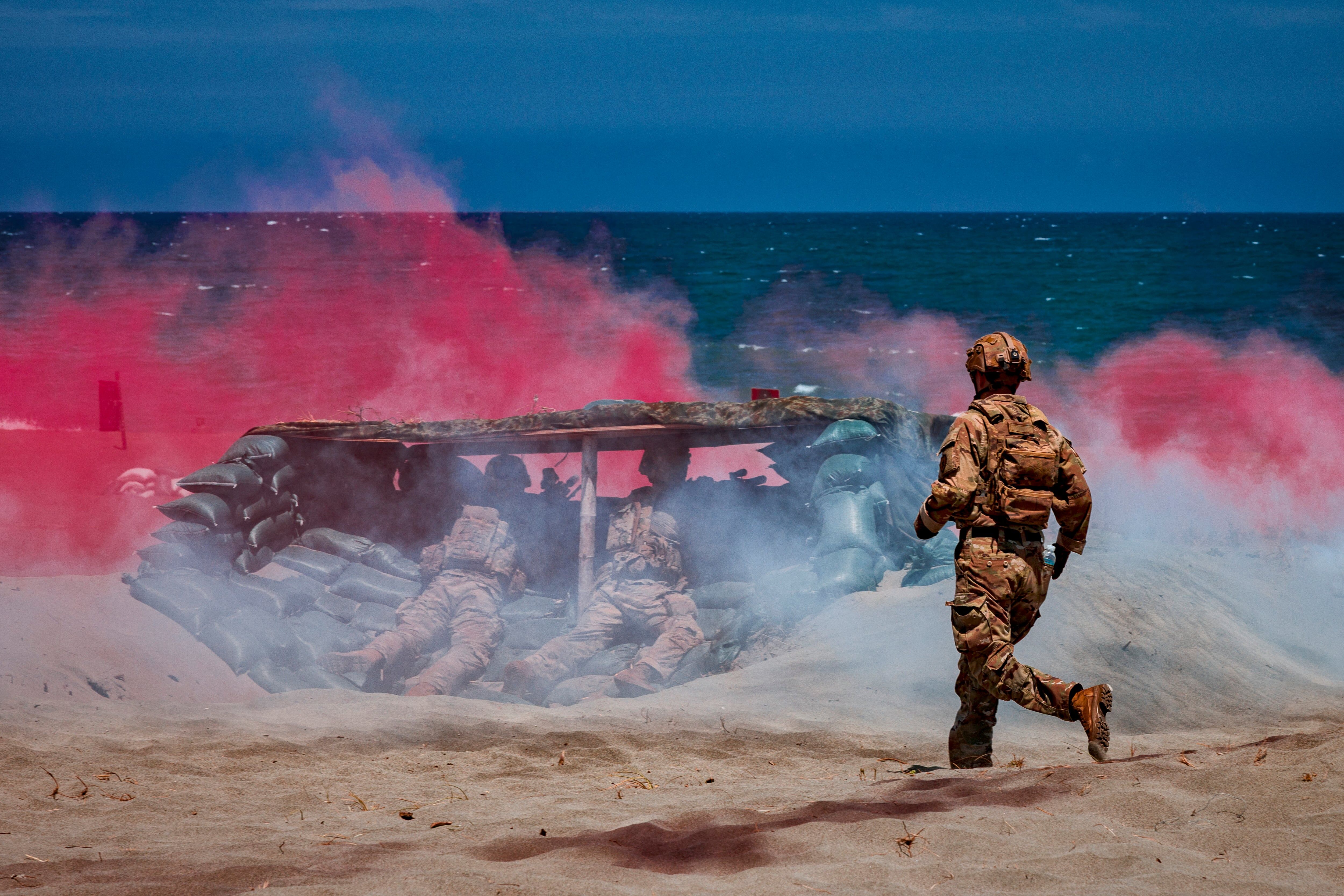
U.S. Army HIMARS operated in Japan for the first time in 2021 during an exercise in Hokkaido and were first deployed to Japan’s Southwest Islands, which separate the East China Sea from the wider Pacific, in 2022 for an exercise on an island northeast of Okinawa. Since then, HIMARS has been a common feature of U.S. exercises with Japan, most recently this year’s Keen Sword, for which Army HIMARS were sent to a Japanese island that is only 150 miles east of Taiwan.
The Army’s HIMARS has a longer history in the Philippines, but in recent years, U.S. and Filipino troops have employed it in new roles, such as anti-ship strikes, and in new parts of the country. Exercises in 2024 and 2025 saw HIMARS deployed to Palawan, facing the South China Sea, and to the northern coast of Luzon, facing Taiwan.
This year’s edition of Balikatan, the two countries’ largest annual exercise, showed their ability to move HIMARS around the country by land, sea and air: In April, U.S. soldiers and airmen transported a HIMARS to Itbayat, the Philippines’ northernmost municipality and only 100 miles from Taiwan, for a dry-fire exercise. A few weeks later, an Army watercraft transported a HIMARS launcher to Balabac Island, south of Palawan, for the first time for a live-fire exercise, which showed its ability “to protect shipping going into the Sulu and Celebes Sea,” the Army said.
The ability to move forces into and across the first island chain demonstrates alliance integration and sends a message to rivals, according to Gen. Ronald Clark, commander of U.S. Army Pacific. “It’s really a joint success story,” Clark said at the Association of the U.S. Army’s annual conference in Washington, D.C. this month.
Clark pointed to a recent exercise for which soldiers loaded HIMARS launchers on aircraft at a base in Washington state and flew them to the Philippines, all of which was visible to adversaries. “We then join munitions from Korea that were drawn out of stocks there to the Philippines, where our adversary could see it, and then we conduct a live-fire on the backend of a HIMARS rapid-infiltration operation,” Clark added. “Being able to do that, it, one, takes a lot of skill. Second, it takes a tremendous amount of partnership with, in this case, allies to assist us.”
Clark said improving capabilities in increasingly complex exercises affects adversaries’ thinking. “To be able to conduct operational maneuver and have tremendous tactical effects that then have a strategic effect on our adversary is exactly what we were looking to gain, because what that does is it gives them pause.”
Over the past two years, the U.S. Army has introduced its Mid-Range Capability, a new ground-based missile system known as Typhon, to its training in the first island chain. Typhon can fire SM-6 missiles at air and maritime targets a few hundred miles away and Tomahawk missiles at land targets up to 1,000 miles away, bringing swathes of China and Russia into range from the Philippines and Japan.
Typhon’s first overseas deployment was in 2024 in the Philippines. It has remained there since then, and in May this year, it was test-fired for the first time, striking a target in central Luzon from nearly 400 miles away. The Army sent a Typhon to Japan for the first time in August 2025 for an exercise the following month, but the weapon lingered until November that year. It returned to Japan this summer, deploying to the southernmost of Japan’s main islands for exercises in June and September and moving to a base on Okinawa for storage in October. U.S. officials told Tokyo the deployment isn’t meant to be permanent, but it has no official end date.
The Typhon was sent to the Philippines at Manila’s request and “has maintained forward presence for now over 30 consecutive months,” Maj. Gen. Bernard Harrington said in a presentation at the AUSA conference. Harrington commands the recently established 7th Infantry Division/Multi-Domain Command-Pacific, which combines the 7th Infantry Division’s ground-maneuver elements with the long-range fires and non-kinetic effects of the 1st Multi-Domain Task Force.
Typhon’s presence in the Philippines has allowed for extended in-theater training, giving soldiers more insight into issues like “How do we sustain in the environment? How do you protect those types of systems in the environment? How do you connect sensor to shooter?” Harrington said in his presentation. “To be able to do that persistently forward and persistently with our ally in the Philippines and our partners is incredibly important for us.”
While the presence of HIMARS and Typhon in new places has been widely publicized, those deployments also create opportunities for U.S. troops to do less visible work to improve communications links and enhance their command-and-control networks, ensuring that friendly forces have a common operating picture of the battlefield and can use their weapons effectively in combat.
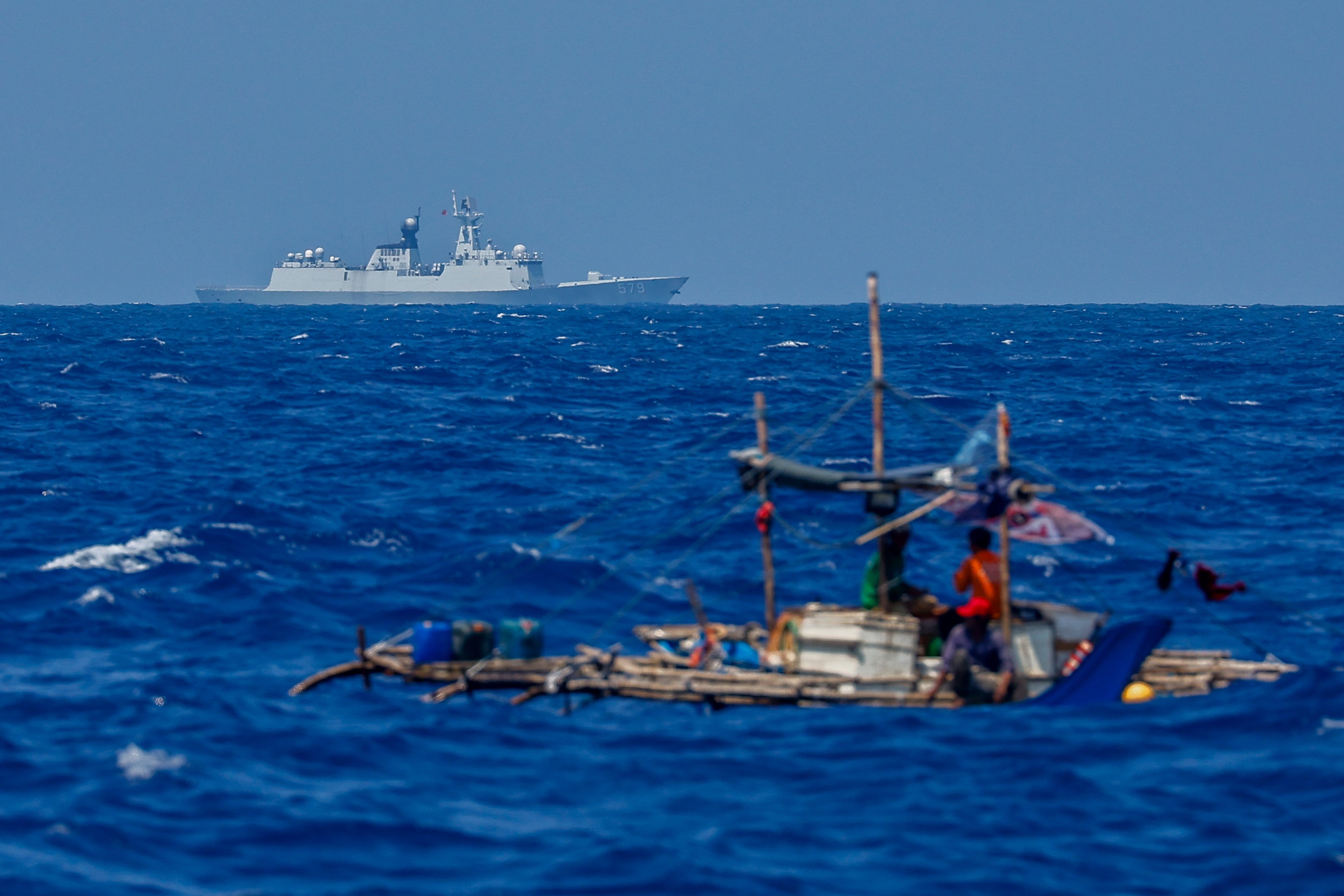
China has watched these developments warily. Beijing regularly criticizes U.S. exercises with Japan and the Philippines as provocative and destabilizing, and it has singled out Typhon deployments for vitriol. But experts cited by Chinese state media also say China has an advantage against weapons like HIMARS when they are deployed on islands near Taiwan because the islands’ small size and terrain will hinder mobility and concealment and their remoteness will make it easier to spot and block resupply efforts.
The logistical challenge is real. U.S. war games also emphasize the difficulty of resupplying small islands near Taiwan — but Harrington said it underscores the need for US forces to disperse and adopt lower-cost, lower-signature weapons alongside expensive missiles.
“This maximizes options for the Joint Force while also enhancing the protection and survivability of our soldiers,” Harrington told Defense News at AUSA. “For example, the employment of systems such as long-range one-way-attack drones, unmanned surface vessels, and long-range launched effects may enable our division to achieve a desired effect for the Joint Force while also preserving our larger, more exquisite systems until needed for a specific purpose.”