
India capitalizes on Europe’s growing demand for ammunition
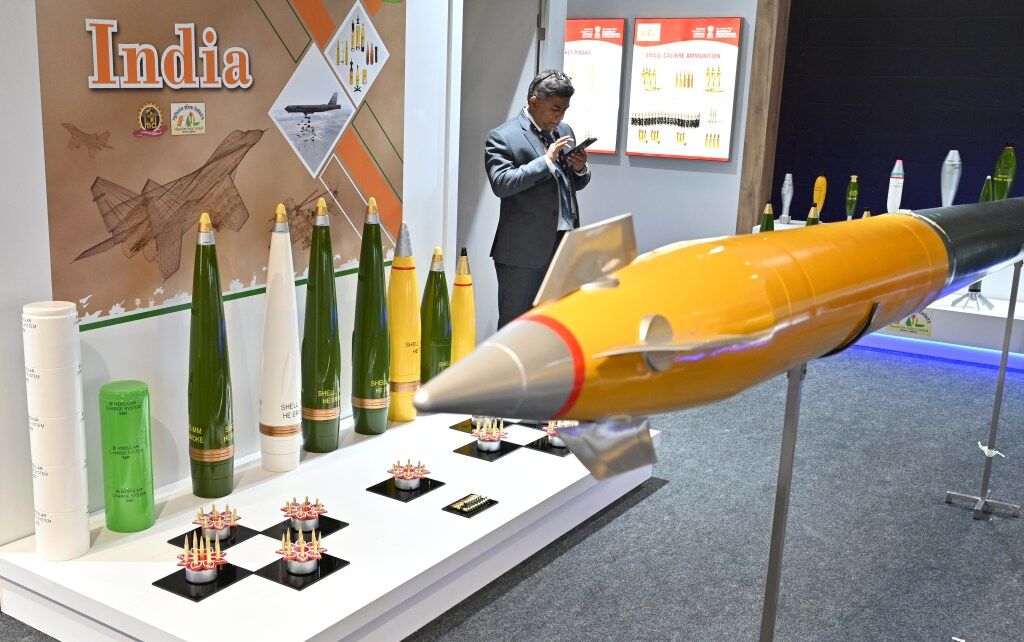
NEW DELHI — India’s defense exports to Europe have surged, driven largely by demand for ammunition and artillery shells as European countries ramp up military spending amid Russia’s war in Ukraine.
The rising exports could pave the way for deeper industrial cooperation between the two sides.
Indian Defence Secretary Rajesh Kumar Singh said that demand linked to the European Union’s “ReArm Europe” initiative, combined with India’s expanding defense manufacturing base, is boosting exports. He spoke Oct 23. at an event in New Delhi.
Singh cited a Bloomberg report that found a sharp increase in India’s exports of ammunition and related products to Europe.
India exported at least $872 million worth of ammunition in the four years since Russia’s invasion of Ukraine, a more than 1,600% increase compared with the preceding four-year period, according to the report, which cited data from Trade Data Monitor.
Central and East European countries including Romania, Slovenia, the Czech Republic, Slovakia, Bulgaria, Croatia, and Poland were among the biggest customers.
Ammunition exports have risen sharply since 2024 as European countries replenish stocks and strengthen defense capabilities following Russia’s invasion of Ukraine, analysts say. The exports include artillery shells, small-caliber ammunition, mortars, propellants and explosives.
European destinations accounted for 40% of Indian global exports of arms and ammunition in the last financial year, according to Samuel Rajiv, Research Fellow at the Manohar Parrikar Institute for Defence Studies and Analyses in New Delhi.
He said this surge could translate into a long-term trend. “There will be greater opportunities for India due to Europe’s greater focus on defense, which will result in a lot of money going into the transformation of its defense industrial base,” said Rajiv. “At the same time, Indian exports will gain momentum not just because of Europe’s requirements but the steps India is taking to expand its own defense manufacturing base.”
Indian exports could also get a fillip as tariffs on arms and ammunition from India become lower when a free trade agreement concluded between India and the European Union takes effect in the coming year.
New Delhi is also seeking a broader role in Europe’s defense market through industrial partnerships. Defense Secretary Singh said India wants to establish joint ventures with European companies in India, while Indian companies would seek partnerships in Europe to gain access to government defense procurement programs.
Russia is not an option for Europe, that is over.
Dinakar Peri, Carnegie India
Analysts say although it remains to be seen whether India and the EU can build more sustained defense industrial ties, partnering with each other is emerging as a viable option for both sides as Europe seeks to diversify its supply chains.
“India offers that scale, size and ecosystem as well as trust as Europe tries to build resilience from the United States. Russia is not an option for Europe, that is over. China has its own red flags in many ways in strategic areas and critical domains. So that leaves very few options available,” says Dinakar Peri, Fellow in the Security Studies Program at Carnegie India.
At the same time, India has also been working to diversify its defense relationships given its longstanding dependence on foreign suppliers, including the United States. “So a closer partnership with Europe also works for India,” he said.
Pointing out that several American, French, and Israeli contractors have already integrated Indian vendors into their supply chains, analysts say the EU can make India its sourcing hub for a range of items.
However New Delhi’s longstanding military ties with Russia could raise concerns in some European capitals as India eyes deeper defense partnerships with the EU.
“It remains to be seen whether this will become an obstacle to deeper defense industrial ties with the EU,” according to Peri. “Bilaterally, India already has strong defense relationships with countries such as France, but it is unclear how the EU as a bloc will view India’s military ties with Moscow.”