
Navy faces ‘years-long’ maintenance crunch amid record-breaking, extended deployments
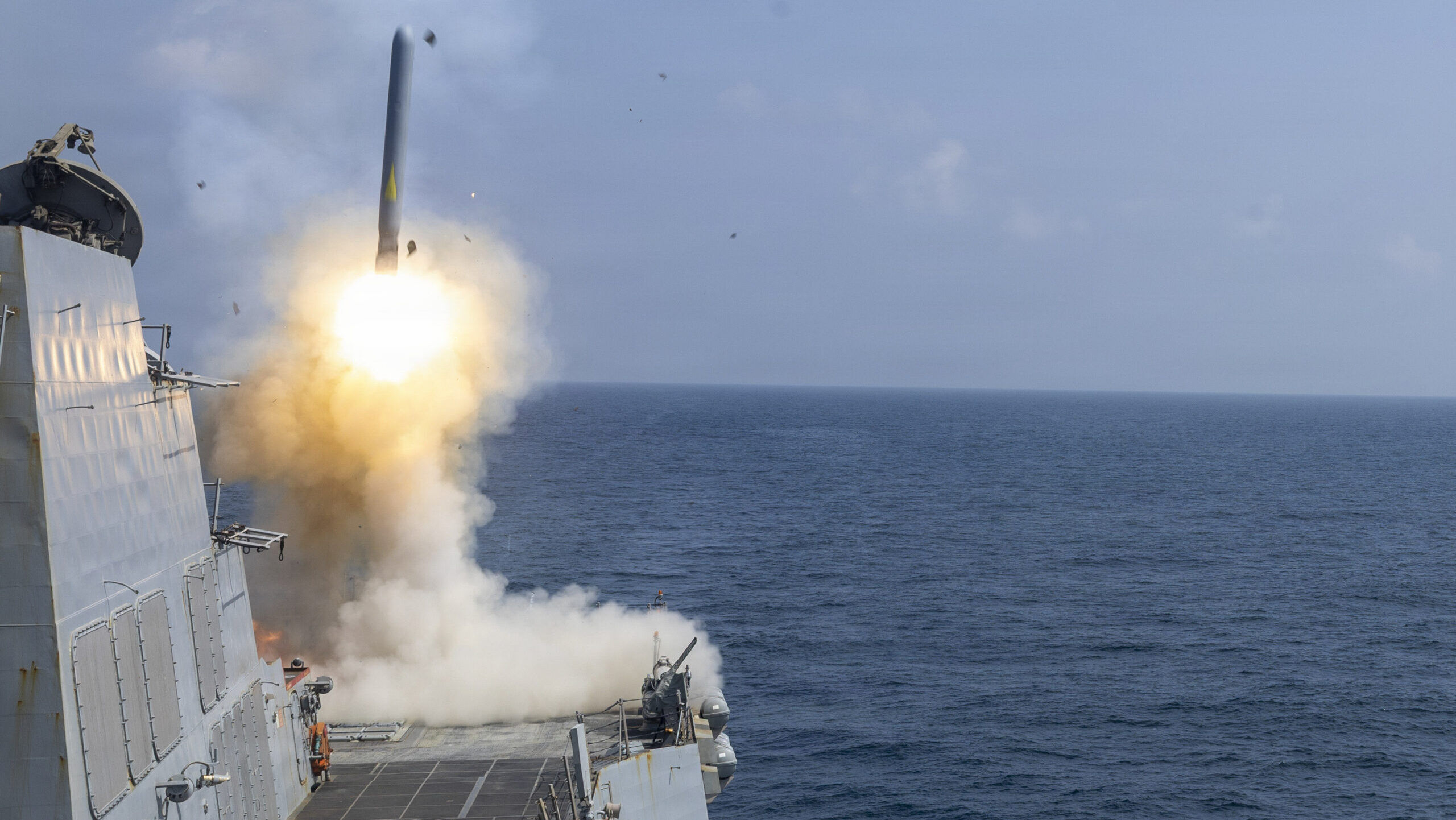
WASHINGTON — The US Navy expects it will take years for its fleet to recover from recent drawn out deployments, with leaders bracing for a surge in maintenance work that could strain shipyard capacity and force trade-offs between repairs and modernization.
Chief of Naval Operations Adm. Daryl Caudle said Monday that the service is bracing for maintenance availabilities — particularly impacting the destroyer fleet — to snowball as some of its aircraft carriers and surface vessels return from more than 300-day long periods at sea. As a result, the Navy is weighing how to prioritize repairs, shorten some timelines and defer larger projects without pushing the service’s schedule further behind.
“You’re talking hundreds of availabilities and millions of dollars. Hundreds of millions of dollars have to be applied to that problem as we start retrograding these destroyers back into their maintenance period,” Caudle said at the United States Navy Memorial. “But this is a years-long recovery. There is no workaround on that.”
Speaking earlier this month, Vice Chief of Naval Operations Adm. James Kilby voiced similar concerns, noting that efforts in the Middle East like Operation Epic Fury have contributed to “artificially high combat surge ready rates” because ships remain at sea on extended deployments and have yet to return from the region. However, he warned that “the problem will come when they eventually do come home,” signaling that an influx of ships entering maintenance could postpone modernization efforts.
“The industrial base will not be able to swallow that pill, and so we’ll have to sequence that,” Kilby said during an Oct. 8 National Commission on the Future of the Navy hearing. “There’s a couple things that can happen there. I’ll defer maintenance. I’ll either squish the package into the bare minimum and not do modernization things I need to do. So that’s the bill that’s being paid there.”
This year, extended deployments have pushed the Navy’s ships well beyond their typical seven-month period at sea. For example, the aircraft carrier Gerald R. Ford completed a 326-day deployment in May — shattering the aircraft carrier Abraham Lincoln’s previous record of 294 days at sea in 2019 and 2020.
Destroyers have also logged exceptionally long deployments this year. The McFaul returned to Naval Station Norfolk on Oct. 23 after an 11-month deployment totaling 332 days at sea. While underway, the ship integrated with the Abraham Lincoln, George H.W. Bush and the George Washington carrier strike groups to provide anti-air warfare and surface fire support amid combat operations, the Navy said in a news release.
The destroyer Spruance has been at sea even longer. The San Diego Union-Tribune reported that the destroyer surpassed the record for longest destroyer deployment after the ship hit 339 days underway on Sunday, a milestone previously held by a destroyer in World War II.
A Navy spokesperson told Breaking Defense in July that the service has 75 destroyers in its fleet. More than a dozen destroyers are actively deployed in the Red Sea and Arabian Sea as of Monday, according to the USNI News fleet tracker.
While the public shipyards typically conduct maintenance for nuclear-powered submarines and aircraft carriers, private yards usually oversee repairs for the Navy’s surface fleet, including destroyers and cruisers.
A Backlog Of Challenges
Maintenance issues have consistently plagued the Navy. In August, the Government Accountability Office issued a report that found public shipyards only completed 11 percent of submarine maintenance periods on schedule.
Likewise, the Congressional Budget Office found in December 2025 that maintenance for the destroyer and amphibious fleets takes 20-100 percent longer than the Navy accounts for. The agency also estimated that destroyers will spend roughly nine years — or roughly a quarter of their planned service life — in maintenance.
When asked about maintenance delays resulting from lengthy deployments, Norfolk Naval Shipyard Commander Rear Adm. Kavon Hakimzadeh said during a September Center for Maritime Strategy roundtable that the situation is “going to be a pig through the snake kind of scenario.”
Hakimzadeh said there’s currently a “nice sequence” for aircraft carrier maintenance and that the service is targeting a six-month period for the Ford. He acknowledged that submarine maintenance is “a little bit of a different story,” and predicted destroyers would face the brunt of maintenance challenges upon returning from the Middle East.
“There’s some choke points just based on capacity out there for all the destroyers that are going to be coming back,” Hakimzadeh said. “We’re running the destroyers really hard out there, and I suspect they’re all going to need to go into the same dry dock, and we’re going to have to sequence them in.”
Eric Labs, a senior analyst for naval forces and weapons at the Congressional Budget Office, said the full impact of ongoing military operations on the fleet is difficult to predict because it’s unclear how long they will continue. However, he said the Navy has historically taken “at least several years” to catch up on maintenance after previous military operations that required a surge in naval capacity.
“At a general level, ships that are missing their maintenance availabilities now because of ongoing operations would have that maintenance manifest itself over the next several years,” Labs told Breaking Defense.
He noted that destroyers and aircraft carriers are most likely to be affected by deferred maintenance — destroyers due to their “high utilization,” and aircraft carriers because there are less than a dozen in the entire fleet and they are the Navy’s largest vessels.
While Labs said that some private maintenance shipyards that work on the Navy’s surface fleet have voiced concerns about a lack of work at present, he said they would face a hefty workload once destroyers return that would create planning and workforce challenges for both industry and the service.
“The private maintenance yards in the US are undergoing a famine and then, later, will experience a feast cycle,” Labs said. “The consequence of that will depend on unique ship circumstances. It could mean some ships will need to return to sea before getting all the maintenance they need, which could just exacerbate problems in the future. Or it could mean some ships will sit idle until the maintenance can be done.”
Even so, Labs said the impact would vary by ship — depending on its age, the length of its deployment, the timing of its last maintenance period and other factors.
Bradley Martin, a retired Navy captain who is now a senior policy researcher at RAND, also predicted it would take years for the fleet to recover from maintenance backlogs stemming from current operations in the Middle East. He said nearly every ship class would likely be affected, although the most acute maintenance issues could hit the destroyer fleet, given its heavy operational use in the Middle East.
“I think we’ll start seeing mounting cost as the Iran conflict winds down and might not see the full impact for at least two years,” Martin told Breaking Defense. “And it will be years past that before the force fully recovers.”