
Taiwan 2027 conflict window remains valid, Army Pacific commander says
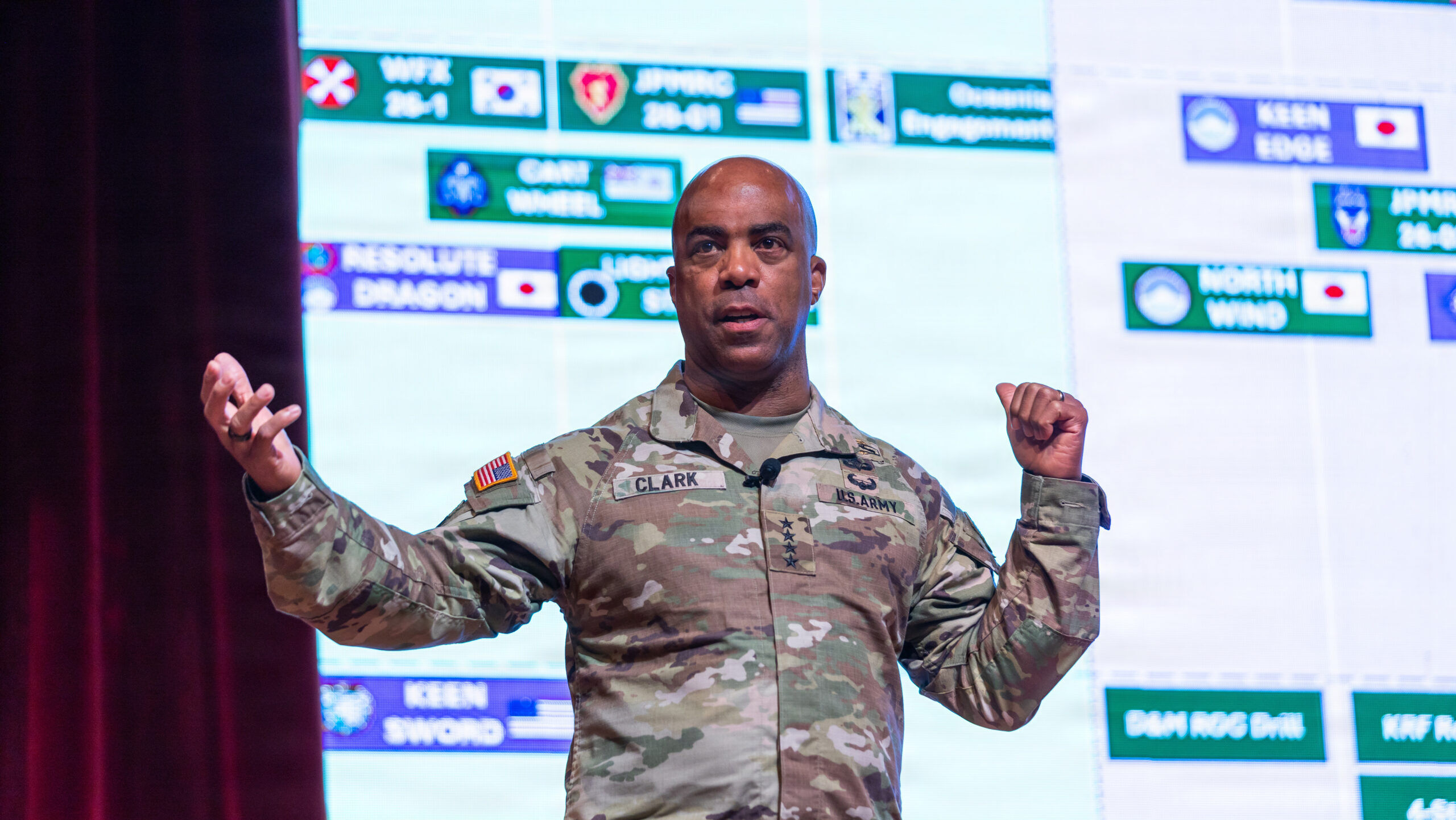
WASHINGTON — The head of US Army Pacific says his command is still preparing for the potential Chinese invasion of Taiwan that US officials have warned could occur as early as next year.
“The question is, is the window still valid? The answer for us at USARPAC is yes,” Gen. Ronald Clark said Tuesday at AFCEA’s TechNet Indo-Pacific conference in Hawaii.
Known as the “Davidson window,” the timeline is named for retired Adm. Phil Davidson, former head of US Indo-Pacific Command. In 2021, Davidson told the Senate Armed Services Committee that China could develop the capability to invade Taiwan within the following six years.
The 2027 date has since served as a planning benchmark for US and allied forces preparing to deter potential Chinese aggression against the self-governed island, which Beijing claims as its territory.
Clark, who served as Davidson’s chief of staff when he made the proclamation, said Army Pacific is working to move forces and equipment in the region to deter conflict during that period.
“We’ve embarked upon a strategic approach to setting the theater that we refer to as Army Ready Forward,” Clark said. The effort involves positioning equipment, materiel and personnel on a rotational basis across the first and second island chains west of the international date line.
The goal is to be ready by April 2, 2027, he said.
“Again, it’s not a date that we think that conflict will happen. It is a period of time for which we’re snapping the chalk line to say we need to be ready by this date,” Clark added. “But we’ll continue to prepare, we’ll continue to modernize, we’ll continue to posture ourselves for the business of deterring war well beyond [2027].”
Asked about what operational challenges industry could help address over the next six months, Clark pointed to the need for both advanced capabilities and affordable systems that can be produced at scale.
The military has largely relied on bespoke and tailored equipment in recent decades, but developing and procuring such systems can be expensive and cause significant delays in getting gear to the front lines.
As a result, the Defense Department has begun emphasizing a commercial-first approach, trying to adopt good enough solutions that soldiers can immediately use during operations. That approach also calls for fielding capabilities at scale, including large numbers of low-cost drones that can overwhelm an adversary.
“We need the right balance between exquisite, high-end systems and affordable, mass-producible alternatives. Meeting that requirement demands that the industrial base adapt to provide the surge capability and capacity required in crisis,” Clark said. “Our operational requirement is clear: we must develop resilient, affordable and scalable ways to sustain forces at the tactical edge when traditional infrastructure is disrupted or unavailable. This requirement underscores an urgent need for industry partnership.”