
US, Japan reach agreements for AMRAAM assembly, SM-3 production boost: Japanese MoD
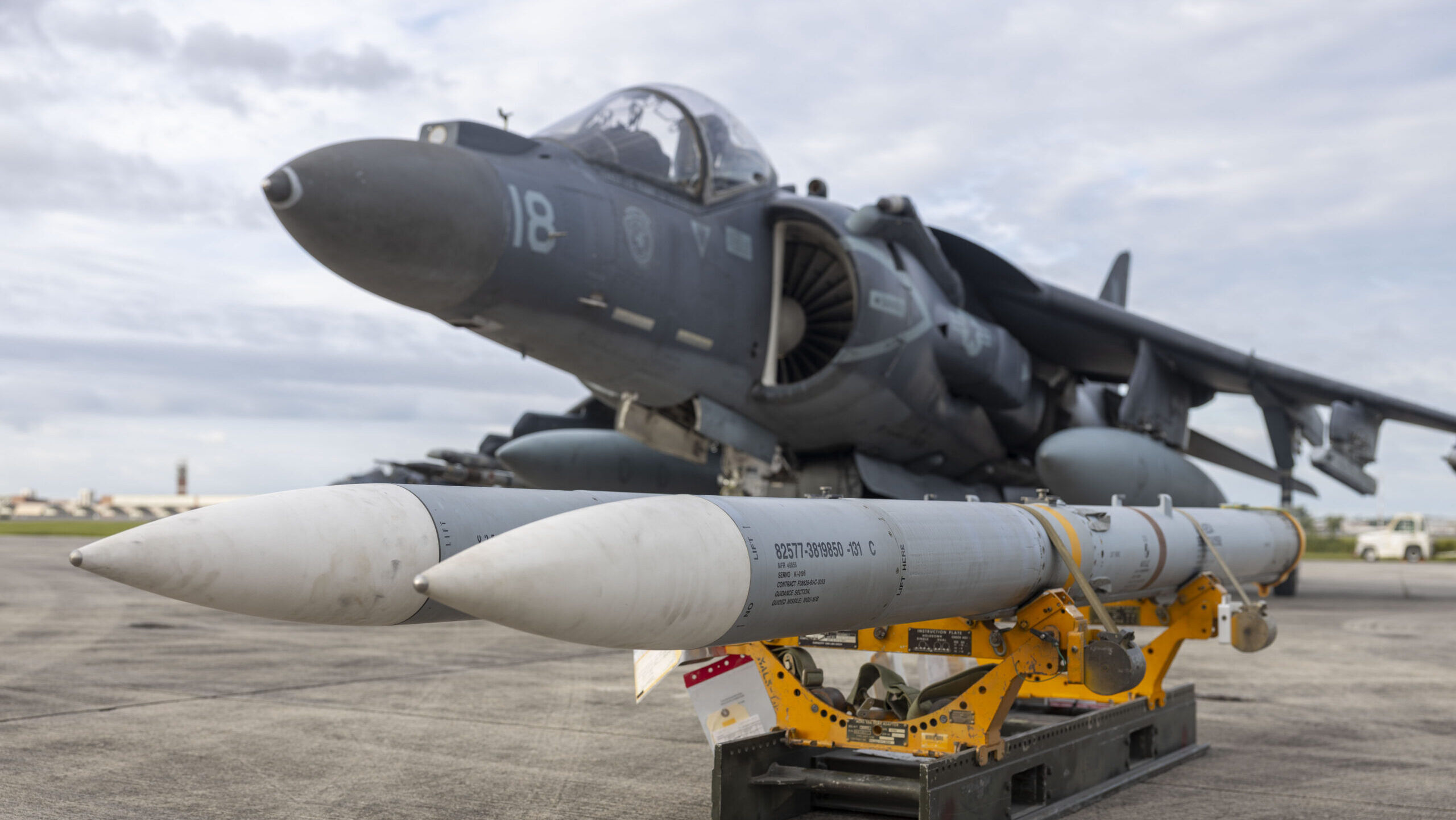
WASHINGTON — The US and Japan have finalized a plan to assemble the Advanced Medium-Range Air-to-Air Missile (AMRAAM) in Japan amid a crunch for munitions, according to Japanese Defense Minister Shinjiro Koizumi.
In remarks posted by the Japanese Defense Ministry, Koizumi confirmed the AMRAAM agreement covers “the establishment of a final assembly and inspection facility in Japan,” according to a Google translation. The weapon is “essential” for F-35 Joint Strike Fighters, Koizumi said, which are operated by Washington and Tokyo among other international partners.
“This is a groundbreaking agreement that will not only ensure the acquisition of equipment needed by both Japan and the United States, but will also strengthen Japan’s defense industry base,” Koizumi said Wednesday during a press conference on the sidelines of the Association of Southeast Asian Nations (ASEAN) Defense Ministers’ Meeting in the Philippines.
The defense minister did not share which Japanese industry partner was picked to assemble the missile. Koizumi additionally did not include a timeline for opening the facility, or its expected output.
Manufactured by RTX subsidiary Raytheon, the AMRAAM is a key air defense weapon that can be fired by aircraft and ground-based launchers. The missile is in high demand amid conflicts in Ukraine and the Middle East, and ramping up its production is a key focus of military planners.
The AMRAAM agreement follows a September contract award to Raytheon worth up to over $20 billion under a five-year agreement, with options for an additional two years of production. That contract will “nearly” double the weapon’s production, the Pentagon said at the time — as long as US lawmakers provide the necessary funding.
Koizumi additionally disclosed that the US and Japan “agreed to share the necessary technical information to achieve increased production” of the Standard Missile-3 Block IIA, a primarily ship-based interceptor used to bat down ballistic missiles. The SM-3 Block IIA is a joint program between the US and Japan, though Koizumi did not share how much the agreement may raise the interceptor’s production rate.
A Tuesday readout of a meeting between Defense Secretary Pete Hegseth published by the Pentagon does not discuss the AMRAAM or SM-3 agreements. However it says Hegseth “welcomed Japan’s efforts to strengthen its defense industrial capacity, and both leaders committed to continue close coordination on critical munitions production.”
RTX deferred to the US Defense Department when asked to comment on the agreements. A Pentagon spokesperson did not respond to an inquiry by press time.
The AMRAAM and SM-3 agreements were both part of “Operation Supercharge,” a joint US-Japan effort to boost defense technology cooperation, according to Koizumi. The two countries are deepening defense ties amid a historic ramp up in defense spending in Japan as the threat of Chinese expansion looms large over the region.
Koizumi and Hegseth “shared a sense of crisis regarding the increasingly severe regional situation and agreed to strengthen the deterrence and response capabilities of the Japan-US alliance at an even faster and stronger pace,” Koizumi said during the Wednesday press conference, without explicitly referencing China.