
Bilateral no more: PACOM officials highlight multi-national data sharing network
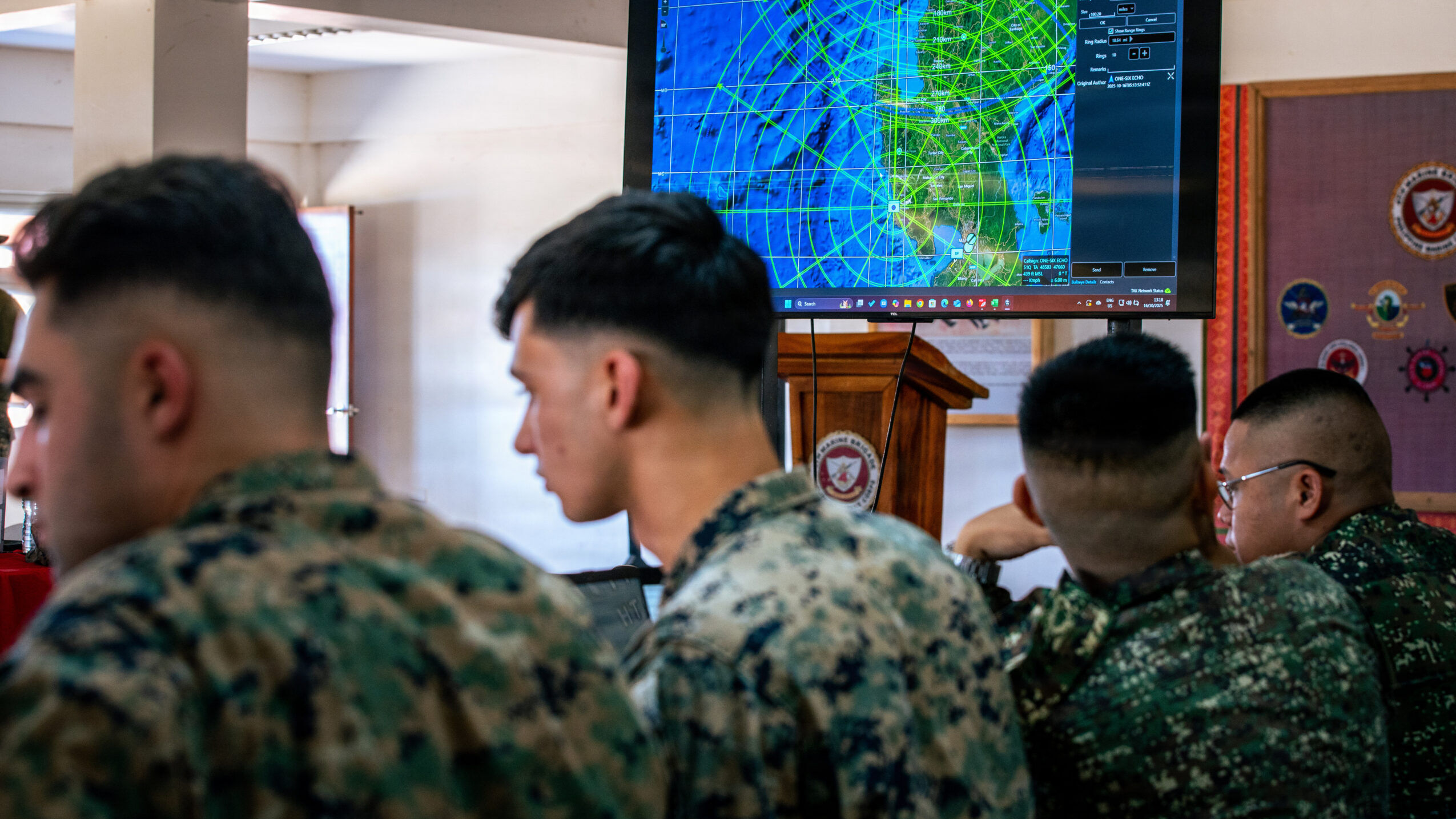
WASHINGTON — On the Pentagon’s long journey towards the real-time sharing of data between allies, a key official said 2026 marked the year in which partners in the Pacific, at least, were able to see the battlefield with a common operational picture (COP) and act as one.
“This was really the first year that all of our capabilities are in a multilateral environment where our partners are using those warfighting applications and tools with the US and we have a single COP to conduct warfighting,” Brig. Gen. Michael Smith, director for command, control, communications, computers and cyber at Indo-Pacific Command said Thursday at the TechNet Indo-Pacific Conference.
Smith was referencing what he and other officials called the PACOM Mission Network, a system that allows US forces and partners to share data and mission planning tools securely, across classification to jointly conduct operations or prosecute targets.
US officials for years have discussed the notion and need for so-called mission partner networks or environments to enable multiple nations to plan together. That effort, like other pieces of the even larger Combined Joint All-Domain Command and Control initiative, is made difficult by different data sources, standards and classification.
But officials noted those challenges are being overcome in the Pacific.
“What’s the so what? So what is our partners are now doing warfighting functions in our mission partner environment,” Smith said. “We’ve had a lot of legacy bilat[eral] systems and networks. Some of those still exist, but now we have a common operational environment that’s multilateral, data-centric, zero trust-enabled. … And the partners are really excited about that.”
The system was used during “several major exercises” over the last year, Lt. Gen. George Rowell, PACOM’s deputy commander, said Thursday at the conference. While he didn’t specify how many exercises it participated in, he noted the command conducted 17 exercises across nine host nations and incorporating 35 countries.
“For the first time, PACOM and several key allies and partners communicated, collaborated, planned, and executed with common tools, common data flows and language translation,” he said. “The real story of these exercises was more than the missiles on the rails. It was our ability to pass that sensor-to-shooter targeting information, data, and the evolving science of the pipes connecting everything across that vast tyranny of distance.”
Smith provided one example in which for the first time Japanese partners used the Maven Smart System, an artificial intelligence-enabled platform used for planning and targeting, which is embedded into the mission network. Using Maven, Japanese are contributing to joint strikes and close kill chains, he said.
Rowell equated these collaboration abilities to deterrence.
“This deterrent capability becomes credible when we prove to any potential adversary that our commanders can execute without missing a beat, even when primary systems are jammed or disabled,” he said. “Assured command and control is inseparable from the concept of deterrence here in the Pacific.”