
On American destroyers, avoid a self-inflicted wound in Spain
Sometimes friends behave badly. When that happens, it is not smart to hurt yourself in retaliation for the friend’s bad behavior. That is true in one’s personal life — and also when it comes to defense strategy.
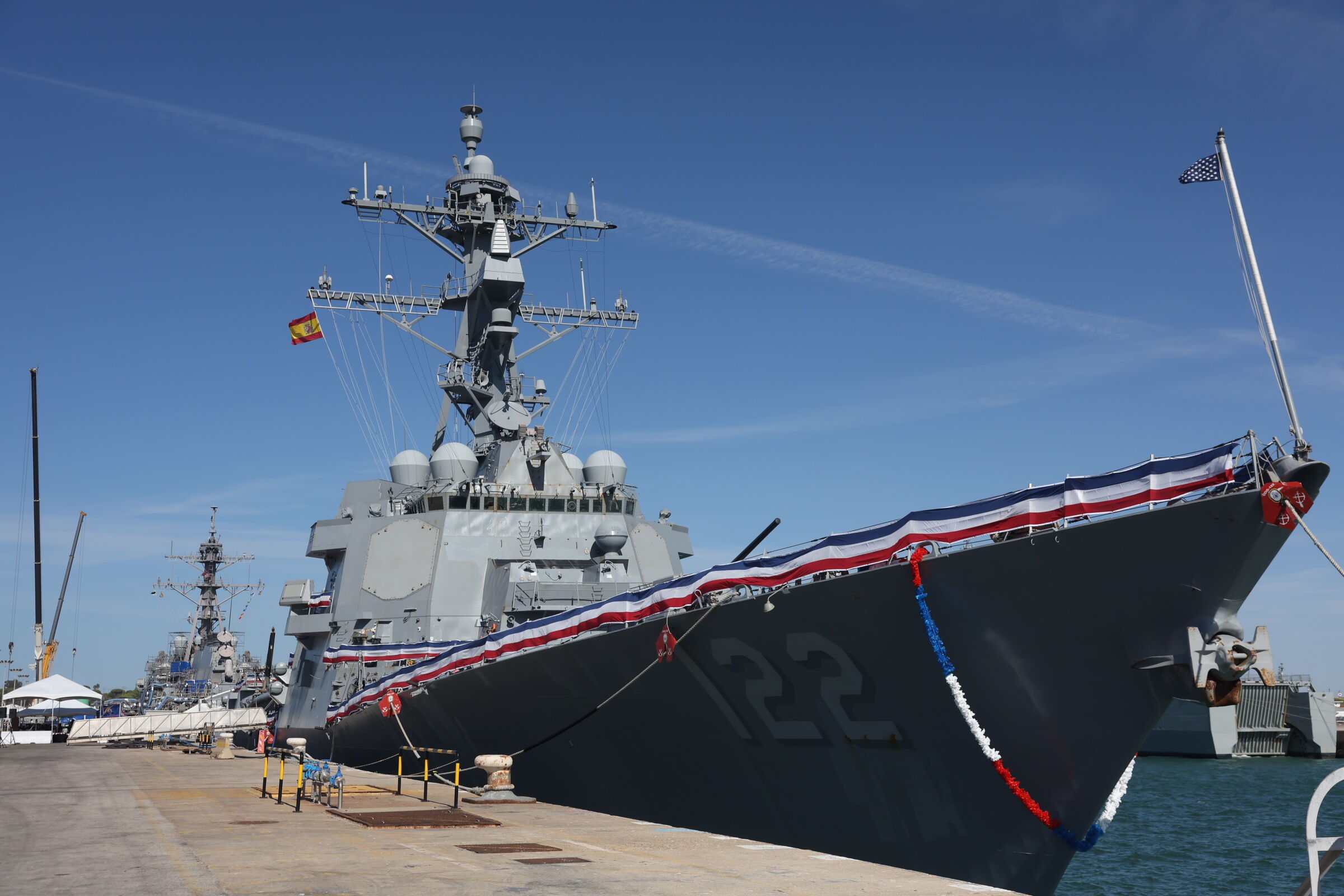
Consider the case of the Trump administration’s ongoing review of U.S. force posture in Europe and whether Washington will maintain a handful of American naval destroyers forward-stationed in Rota, Spain. Stationing destroyers at Rota helps secure vital American interests in Europe, North Africa, and the Middle East and allows the ships to spend more time conducting missions than traversing back and forth across the Atlantic.
To be clear, the government in Spain has certainly not been working overtime to win favor in Washington. Madrid has stubbornly refused to honor its NATO defense spending commitments, spending a paltry 2% of the country’s gross domestic product on defense. “2.1%, no more, no less,” President Pedro Sanchez said in June. “We fully respect the legitimate desire of other countries to increase their defense investment, but we are not going to do it,” he said.
To make matters worse, earlier this year, Madrid also restricted the U.S. use of Spanish airspace or military bases for operations against Iran.
With the administration openly weighing significant troop reductions across the continent, Spain’s actions may have put it near the top of the candidate list for cuts. But a careful examination makes clear that removing the destroyers based at Rota or closing the base there would be a big mistake.
The base hosts six Arleigh Burke-class guided-missile destroyers, up from four under a 2023 agreement. These vessels, which pack a powerful punch, can conduct anti-air, anti-submarine, and anti-surface warfare missions. The ships’ Aegis Ballistic Missile Defense upgrade enables them to defend against ballistic missiles, cruise missiles, and drones. There is no other platform that combines mobile, multi-mission air and missile defense with the endurance to stay on station for months at a time.
Those capabilities have proved pivotal in recent conflicts in the Middle East. Over the past two years, Rota-based destroyers have rotated continuously into the Eastern Mediterranean. As many as four have been on station in those waters, simultaneously defending American interests and supporting the defense of Israel against Iranian ballistic missile attacks. That has saved the lives of Americans and Israelis.
The same ships also provide NATO’s sea-based missile shield against threats from the Middle East. That shield is important to protecting American bases in Europe and their ability to project power into the Middle East and North Africa. The destroyers also serve as the Navy’s forward presence for countering Russian submarine and surface activity in the Mediterranean and increasingly assertive Chinese naval activity off the African coast.
Some might ask whether these vessels can be replaced with European vessels. The answer is no, at least in the short term.
Years of under-resourcing have left European navies a mess. Spain’s own Álvaro de Bazán-class frigates are the most capable European warships, but Europe’s collective sea-based ballistic missile defense capacity remains thin to non-existent, and no European navy can surge Aegis BMD-equivalent coverage into the Eastern Mediterranean the way U.S. destroyers from Rota can.
If Washington brings the American destroyers home to the continental United States, the gap in missile defense coverage for NATO’s southern flank, Israel, and shipping lanes vital to the American economy would not be filled by European navies anytime soon and could potentially create a dangerous security gap for years or even decades.
Plus, a destroyer homeported in Spain, as part of Forward Deployed Naval Force-Europe, spends dramatically more time on station and far less time in transit than a U.S.-based ship that must cross the Atlantic to reach the same waters. That multiplies the combat power each hull generates over its service life.
If anyone in Washington doubts these arguments, consider the current actions of the Pentagon. It has increased the number of destroyers at Rota from four to six, with the final ship arriving only this year. In a recent interview, U.S. 6th Fleet Commander Vice Adm. Jeffrey Anderson suggested the sixth destroyer could not arrive soon enough. Clearly, senior U.S. military leaders believe we need more naval capacity stationed at Rota — not less.
Rota’s submarine support infrastructure, logistics hub, naval special operations support, and air operations also make it one of the most versatile forward installations the U.S. maintains anywhere, facilitating operations across Europe, the High North, Africa, and the Middle East simultaneously from a single location.
None of this means the diplomatic friction with Madrid should be ignored. Washington has every right to press Spain on burden-sharing, defense spending, and foreign policy differences. Washington may need to impose some consequences for Madrid’s decisions, but those should not include self-inflicted wounds that hurt U.S. military readiness and power projection capabilities, making Americans less safe.
The Trump administration should keep six destroyers stationed at Rota. Any other action would be a gift to America’s adversaries.
Rear Adm. (Ret.) Mark Montgomery and Bradley Bowman are senior directors at the Foundation for Defense of Democracies. Montgomery served 32 years in the U.S. Navy, including as deputy director for plans, policy, and strategy (J5) at U.S. European Command. Bowman served in the U.S. Army as a Black Hawk pilot, taught at West Point, and advised members of the Senate Armed Services and Foreign Relations committees.