
EXCLUSIVE: House China committee pushes Air Force on think tank cuts
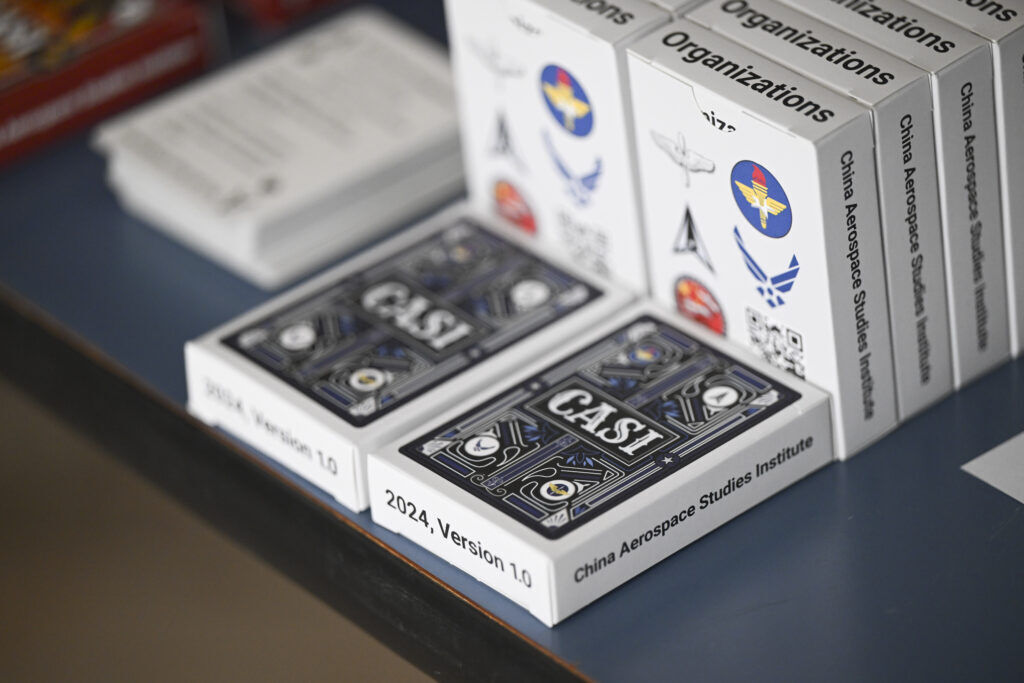
WASHINGTON — Lawmakers on the House Select Committee on China are pushing the Air Force for answers about a planned downsizing of its Beijing-focused think tank, warning that any reduction in the group’s output could impact America’s national security.
“Under-resourcing” the mission of the China Aerospace Studies Institute (CASI) “could risk undermining the ability of military leaders and civilian policymakers to understand” Beijing’s aerospace strategy and military prowess, according to a copy of the letter viewed exclusively by Breaking Defense.
Addressed to Air Force Secretary Troy Meink and signed by Republican Chairman John Moolenaar and Democratic Ranking Member Ro Khanna, the letter requests a briefing by Nov. 20 to provide “resourcing and personnel decisions” for CASI.
In their letter, House lawmakers say that “[a]ny potential loss” of CASI’s skills “is particularly worrisome” due to China’s burgeoning aerospace capabilities and “aggressive activities in the Indo-Pacific region.” Praising CASI’s work, the lawmakers say that alternatives to the institute’s “in-house expertise” would likely require the Air Force and other government entities “to expend considerable resources to purchase contracted expertise from external vendors.”
Given rapidly advancing air and space power by the Chinese People’s Liberation Army (PLA), the lawmakers say that diminishing relevant analysis is “particularly concerning” and could impact American deterrence, as fears mount over a potential battle for Taiwan.
“As the PLA continues to expand its aerospace capabilities, our need to understand these advancements will continue to grow,” the letter says. An Air Force spokesperson told Breaking Defense that the service “will respond directly to the committee.”
The letter comes after it was revealed in September that the Air Force planned to axe CASI’s 10-member civilian workforce. While the Air Force maintained its premier China-focused think tank would remain open and operate with military personnel, its director, Brendan Mulvaney, stressed in an interview with Breaking Defense that the elimination of its civilian staff would functionally shutter the institute.
Founded by Mulvaney roughly a decade ago, CASI regularly publishes on Beijing’s air and space forces, drawing on open-source information translated from Mandarin. The institute’s publications and training courses are seen as valuable resources for educating the broader military policy community on Chinese air and space power, prompting experts to denounce CASI’s expected downsizing.
“The idea that you could do research or the translations that we’re doing is not credible” without civilian experts, Mulvaney previously told Breaking Defense.
Mulvaney explained that the think tank’s civilian posts are being converted to an unfunded status, meaning that staffers will continue to work until being moved to a different role elsewhere in the Department of the Air Force — and once they leave, their positions cannot be backfilled. CASI’s current commitments stretch until around March and will largely function as usual until then, but after that the institute’s fate becomes more unclear, according to Mulvaney.
News of the CASI cuts raised questions about similar efforts run by the Army, Navy and Marine Corps, though spokespeople for each service previously told Breaking Defense that there are no planned changes for their respective Beijing-focused programs.