
Shield AI cofounder teases ‘snowball’ of X-BAT fighter drone announcements in Europe
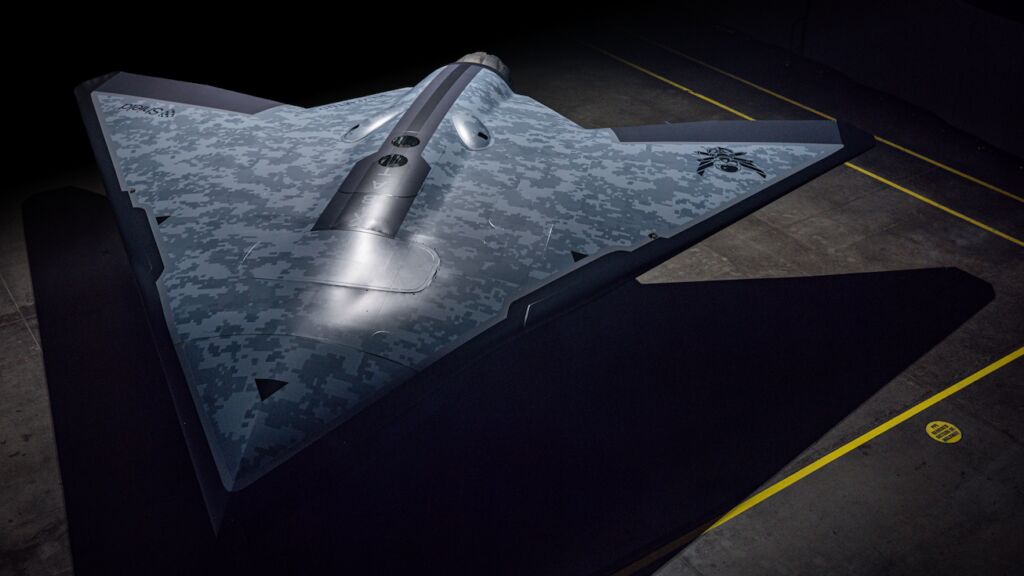
MUNICH — A “snowball of activities” covering European orders and regional partnership agreements for Shield AI’s X-BAT fighter jet drone are set to be announced “soon,” according to the company’s cofounder and chief strategy officer.
Speaking to Breaking Defense today on the sidelines of the International Fighter Conference, Ryan Tseng said that the prospective deals and new industry pacts will be publicized when “we’re ready to announce them.”
He declined to comment on any aircraft quantities involved in the procurements, saying just “watch this space.”
Europe “can and should be a critical component of the [X-BAT] supply chain for Europe,” he said, noting it would make the region stronger at a “warfighting” level. Additionally, a “European sovereign” supply chain, makes the US more capable, stressed Tseng.
Andrew Hawkes, X-BAT director for Europe at Shield AI, also told Breaking Defense that the company is involved in “several active” sales campaigns for the autonomous, vertical take off and landing (VTOL) aircraft across the continent, though declined to disclose any individual customers.
The planned export business builds off a number of other key, regional developments. In June, Polish Prime Minister Donald Tusk reportedly said that Shield AI is planning on local production of X-BAT in cooperation with Poland. More recently, the firm announced a “strategic agreement” with Greece’s GEK TERNA, a critical infrastructure investor, based around a potential collaboration on “parts production, aircraft integration and long-term sustainment for X-BAT in Greece.”
Tseng’s assessment on orders comes after the artificial intelligence startup announced on Tuesday that a first, full-scale X-BAT prototype has completed assembly in Frisco, Texas. Next steps will see the aircraft undergo testing at the company’s facility in Newton, Kan., according to a company statement. Shield AI and the US Navy are jointly investing $400 million in X-BAT.
Elsewhere, Tseng said that a per-aircraft cost for the autonomous drone could be brought down to $25 million, but for a higher-end sensor configuration, customers could expect to pay an extra $10 million.
The baseline $25 million figure works out around a quarter “the cost of a Eurofighter or an F-35 in Europe,” he explained. “We think from a lifecycle perspective, it would beat it [in production fighter jets] by a factor of 10″ based on comparable maintenance costs. “You can use far less crew to operate the aircraft” resulting in “savings across the board.”