
Denmark, Lithuania latest Baltic navies to buy ‘Blocker’ mines through Finnish scheme
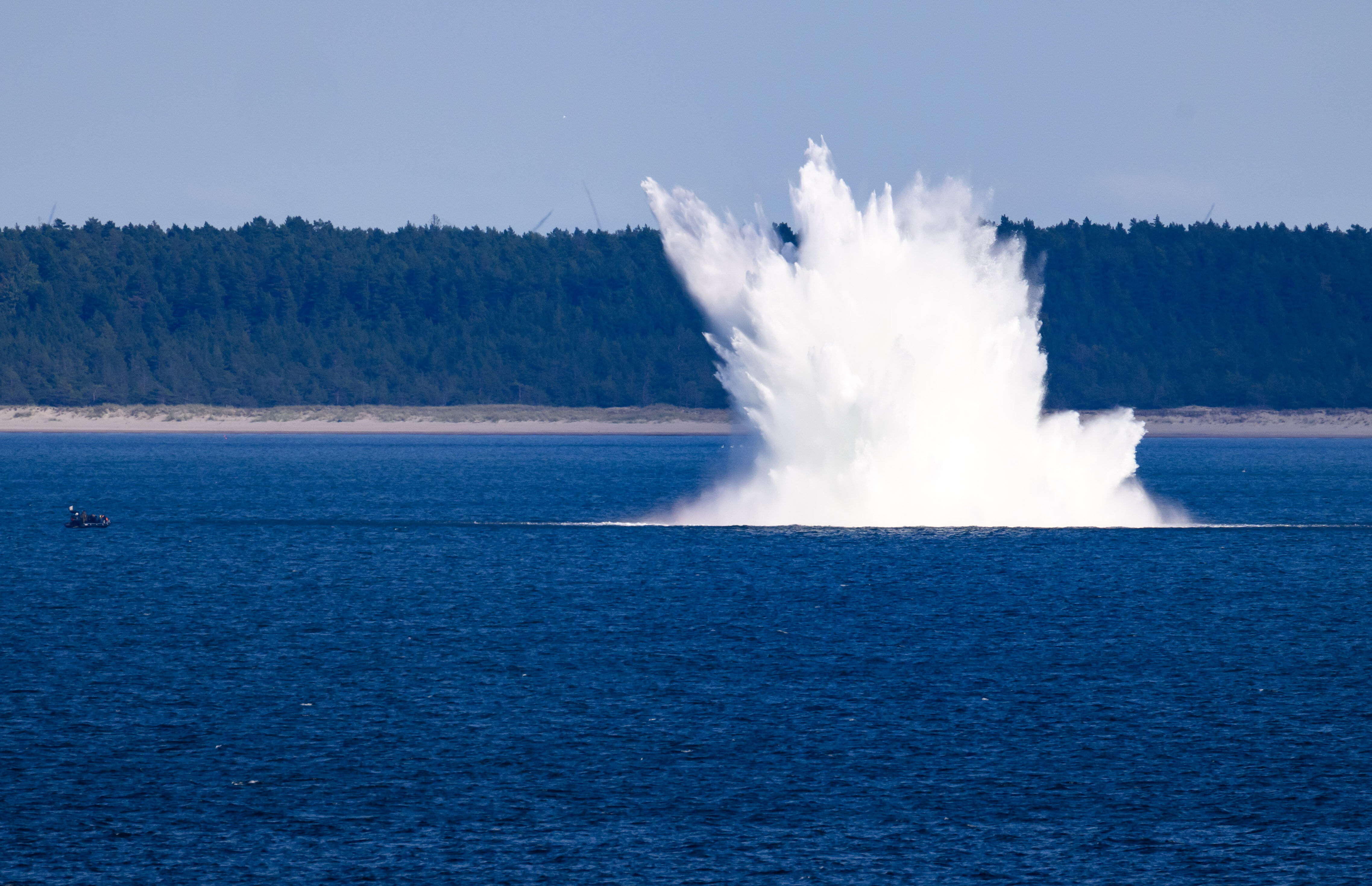
VIENNA — Denmark is the latest country to buy Finland’s “Blocker” naval mines, a day after Lithuania decided to go ahead with its own contract for the weapon.
The forces of Finland, where the mines are made, and Estonia already operate the proximity sea mines. Estonia bought them in 2021.
The Danish acquisition will take place as part of a pentalateral joint procurement agreement that includes Finland and Lithuania, as well as Germany and Norway, who have not yet publicly announced a contract to buy the device.
Lithuania’s ministry of defense similarly said that its procurement of Blocker was taking place under the Naval Mines Cooperation, a procurement agreement that grew out of a program launched in 2024.
Aside from joint buying, the NMC agreement is meant to “strengthen cooperation on logistics, training, exercises and the lifespan of the systems,” the Danish ministry of defense said.
The Finnish military signed a contract with manufacturer Forcit Defence in June on behalf of the five countries participating in the NMC’s procurement scheme. The contract was worth “hundreds of millions of Euros,” the Finnish government said.
Ten countries signed the pact’s original declaration of intent: Belgium, Latvia, Lithuania, Norway, Poland, Sweden, Denmark, Germany, Finland and Estonia, all of which are members of NATO.
Germany may still announce a procurement decision this year, German industry publication Hartpunkt reported, citing “well-informed circles.”
“Selecting Finland as the lead nation of the naval mines cooperation project is a reflection of the Finnish Navy’s long-standing capability in naval mining,” the country’s military wrote in a statement.
Forcit Defence advertises the Blocker mine as having the explosive power equivalent to a ton of TNT. It detects ships using a range of sensors.
Naval mines have been front and center in the news this year, with Iran’s use of the technology to block the Strait of Hormuz and hold a large part of global energy supplies hostage in response to the U.S.-Israeli campaign against it.
The Baltic Sea has also become a key point of tension, particularly since 2022, Russia’s full-scale invasion of Ukraine. With Finland and Sweden’s accession to NATO, the sea is now entirely surrounded by the alliance, except for Russia’s Kaliningrad and Leningrad Oblast coasts. This is a strategic headache for Russia, whose ships must pass through the narrow Danish straits and onward through the Kattegat and Skagerrak to reach the open ocean.
Russia has repeatedly warned that it will not accept being cut off from the Atlantic. “If we do not give them a firm rebuff, the British, French and even the Baltic states will soon become so emboldened that they will try to completely block our country’s access to the seas, at least in the Atlantic basin,” said Nikolai Patrushev, President Vladimir Putin’s aide and chairman of Russia’s Maritime Board, in a February interview with Russian newspaper Argumenty i Fakty and reproduced by the Maritime Board of the Russian Federation. “If this situation cannot be resolved peacefully, the Navy will break through and eliminate the blockade.”