
As private investment in defense increases, some bottlenecks in funding: AIA-Bain
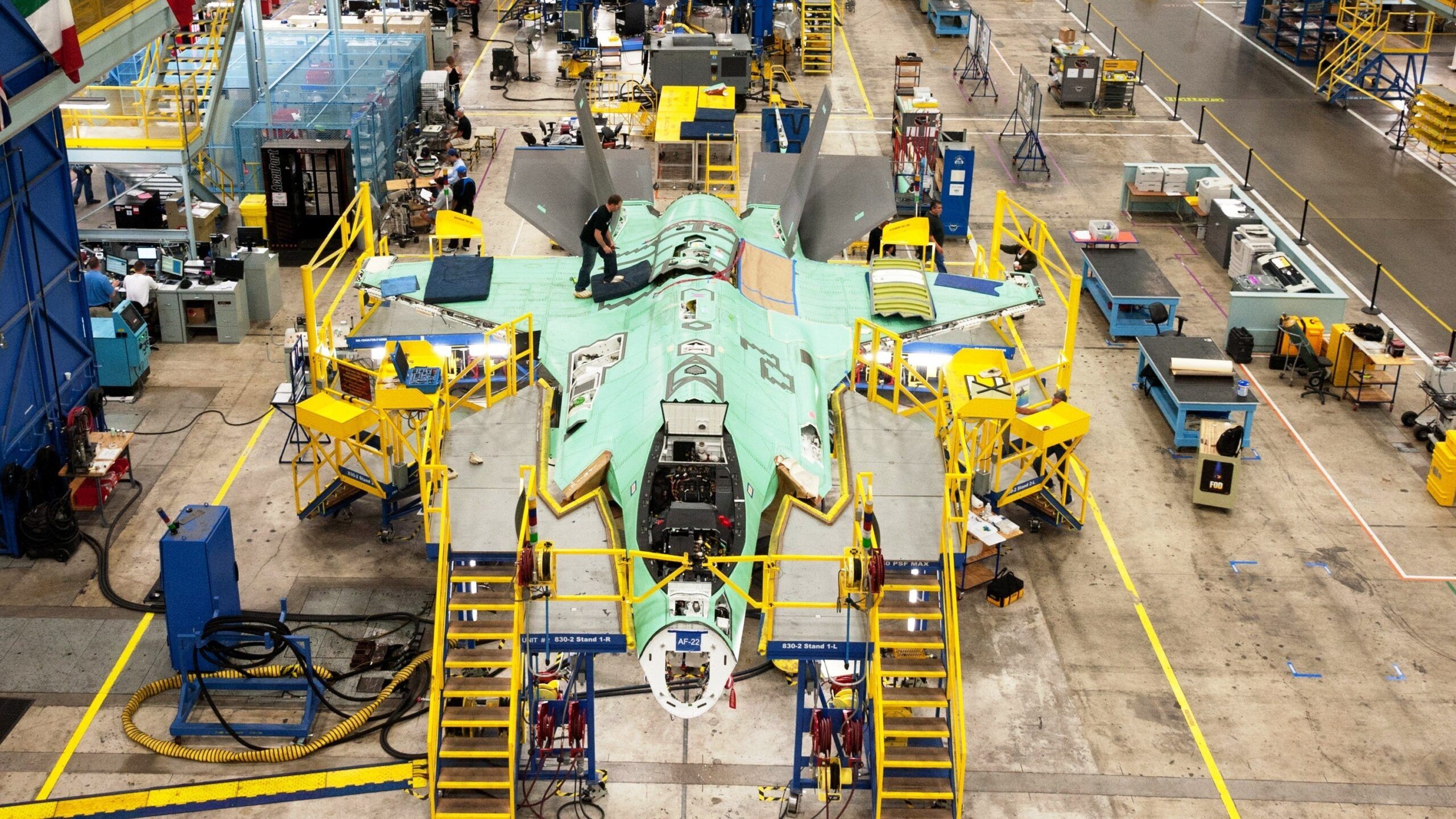
WASHINGTON — Money is pouring into defense technology firms, but key areas like critical minerals and components like semiconductors or solid rocket motors remain an underfunded gap in the industrial base, according to a new study by the Aerospace Industries Association and Bain & Company.
And while venture capital funding for defense has increased by 10 times since 2019, other funding pools like private equity remain relatively untapped by defense companies, the study found.
“Defense does not face a shortage of capital. It faces barriers that make expanded investment, particularly in critical bottleneck areas, more difficult,” states the study.
“The challenge is creating the conditions that allow capital to flow to the facilities, technologies, workforce, and production capacity needed to strengthen the defense industrial base and deliver for the warfighter,” it said.
AIA commissioned the study, which was performed by Bain, in the hopes of explaining to federal decisionmakers how to incentivize more private investment in defense companies, AIA President Eric Fanning told Breaking Defense in an interview.
“There’s a misunderstanding of how much private capital is in defense, how you incentivize it, move it towards defense, and things that you do that inadvertently create barriers to that type of investment,” he said. “Venture capital, private equity, retirement funds — they’re all looking for different things, and you want to create that mix of investment return possibilities to attract that diversity of investment.”
Bain conducted 50 interviews with large primes, startups, investors, banks and others throughout the Pentagon and industry. AIA also provided results from a member survey and data analysis.
“Investment in aerospace and defense stocks has grown,” the study states, pointing to market capitalization of publicly traded US aerospace and defense firms, which nearly doubled 2019 levels at around $1.6 trillion in 2025. “However, private capital is distributed unevenly, and there are often ‘unseen’ gaps.”
One of those gaps is domestic refining of critical minerals like gallium and germanium, which are used in defense products ranging from missiles to radar to magnets.
Mining critical minerals is “capital-intensive and subject to global commodity price fluctuations, while some important machinery is produced abroad,” the study said. “These dynamics give investors pause. Recent policies have increased focus on critical input challenges, but projects remain long-cycle and high risk.”
The Defense Department has taken the unusual step of taking a stake in US-based critical minerals companies, such as a $400 million direct equity investment in MP Materials last year.
While the study did not directly address whether those equity stakes are likely lead to greater private investment, Fanning said government funding was pivotal for ensuring that the US retains access to critical minerals.
“This is a place where there needs to be some government investment,” he said. “If that is considered a national security priority, which I think everybody agrees on, being able to reshore some of this critical mineral availability, there isn’t enough of a demand from the defense industrial base to justify fully private investment to reshore that capability.
Another key gap is sub-tier manufacturing of critical components like castings and forgings, advanced semiconductors, energetics, sensors and solid rocket motors, the study stated. These items are typically made by second or third-tier suppliers who may be privately held, or may choose to use the majority of their production capacity for more lucrative commercial contacts.
“Smaller suppliers can find rapid increases in demand particularly challenging. Their access to capital is lower given their size, especially without a firm order or signed contract,” the study said. “They often also lack the infrastructure to rapidly hire and train employees, especially when located in less densely populated geographies.”
The study did not lay out specific ways to shore up the second and third tiers of the supply chain. However, suppliers told AIA-Bain that the demand signal from the Pentagon was critical for being able to obtain and make investments. One recommendation from the report stated that long-term contracts would “drive supplier investment and productivity.”
Big Gains in VC funding, But Private Equity Lags
Despite the attention on venture capital money flowing into the defense tech space, the “overwhelming majority” of investment dollars continues to come from the stock market, particularly retirement funds and other investors who are seeking stable, predictable cash flows, the study said. (This can be a double edged sword, the study stated, with defense not seen as a sector where an investment will generate a large return.)
However, venture capital investment in the defense sector remains a good news story. Investments in defense have shot up from $1 billion in 2019 to about $10 billion in 2025, with successes like Palantir and SpaceX leading to a growth in venture capital dollars to other defense tech startups, particularly in areas such as space, AI, drones and software, according to the AIA-Bain report.
RELATED: J.P. Morgan eyeing both defense startups and legacy firms for $10B investment push
At the same time, “US venture capital investment in defense is low relative to the technology sector and overall venture investment,” with only about 5–6% of global venture capital funds heading toward defense companies.”
Another key constraint pointed to “overwhelmingly” by venture capital investors and defense tech startups is the funding gap that exists when a firm is transitioning to production.
Companies in their research and development stage “attract private venture investment because their high risk profile, with the potential for a large exit multiple, matches VC investment models,” while a company in a mature production stage attracts investment because of the low risk involved, AIA-Bain stated.
“There is no ‘fit-for-purpose’ investment model for the space in between—when a promising technology has not yet been demonstrated and produced,” the study said.
In contrast to the VC growth, private equity participation in defense is still relatively small at around $1 billion to $3 billion annually, with most private equity dollars streaming toward companies that do significant business in commercial sectors like aerospace or industrials.
“Private equity focuses on established businesses with predictable cash flows, operational improvement potential, and clear exit paths. The most attractive investments therefore have predictable future volumes that can be forecast with confidence using rich and reliable data,” the AIA-Bain study states.
“Historically, defense opportunities have often not met these criteria,” it continued. “But many private-equity leaders interviewed suggest that is changing because of market growth and acquisition reforms.”